Pursuing one’s aspirations with boundless commitment in search of a balance between material ambition and spirituality: the Japanese way of life has accustomed us to seeing great results from the people of Japan, often achieved in just a few years. Different from the Western way of seeing things, this approach is probably the real key to their success.
Could the same be true of whisky?
Anyone with even a passing interest in or knowledge of the sector knows how the fame of Japanese whiskies has swept across the world; in particular, demand for these spirits has soared over the last twenty years, during which several whiskies from Japan have scooped major international awards.
We really are talking about very few years, partly because the origins of these whiskies, though not all that recent, do not have the same history and tradition as Scotch. And yet it was Scotland itself that helped them climb to the top. How?
Let’s step into the world of Japanese whiskies, which are hugely fascinating even for non-connoisseurs. It is worth knowing more about:
- The origins and evolution of Japanese whisky
- The characteristics of Japanese whisky
- Peated Japanese whiskies
- The best Japanese whiskies
- How to drink Japanese whisky
The origins and evolution of Japanese whisky
The first Japanese whisky appeared in 1923. However, the birth of the new made-in-Japan spirit dates back to 1918; the man behind it was Masataka Taketsuru, the first whisky distiller in Japan, a prominent figure also because he went on to become the founder of the Nikka distillery.
The first major push towards this ambitious venture was a journey to Scotland, the country that above all others holds the crown for the art of whisky distilling, which was born there. His cause was backed by the Settsu Shuzo company, which funded the trip. Masataka Taketsuru spent two years combining theory and practice: in Scotland he took a chemistry course at the University of Glasgow and worked as an apprentice in several distilleries. When he returned to Japan, he had both knowledge of the subject and experience in the art of distilling and blending. From this he created a kind of Japanese manual for whisky production. However, Shuzo had gone bankrupt.
So Masataka began making whisky with Shijiro Torii, who was ready to bet on the new spirit and later became the founder of Suntory.
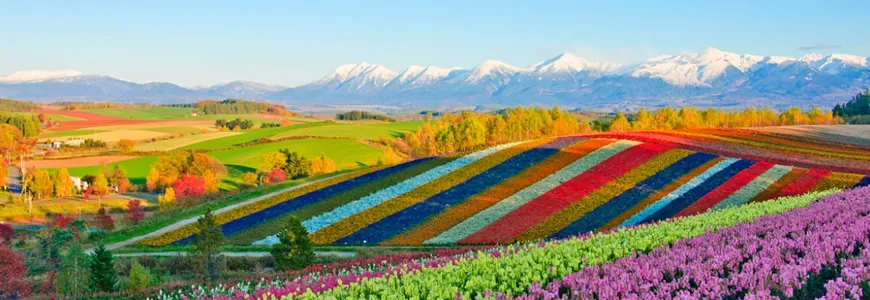
After about a decade, the time came for Masataka to strike out on his own: his first distillery was built in Yoichi, on the island of Hokkaido, where the climate and pure air were perfect for making whisky according to the idea he had developed in Scotland.
A few more years had to pass before his project came to fruition; it was in 1940 that the first Nikka whisky was released, under the very name Nikka Whisky.
The Scottish influence drove Masataka towards a robust, smoky whisky; his rival, Shijiro Torii, wanted a lighter, more floral style instead: two personalities, two different interpretations of the new spirit, but similar ways of being, a commitment and a refinement of technique worthy of having founded a new and remarkable style of whisky.
The characteristics of Japanese whisky
There is more than one reason why the world of Japanese whisky is so fascinating; first and foremost its swift, triumphant rise on the international market. The characteristics of these spirits played their part, but even more so the Japanese temperament, the culture and the way of life of a people who have always been devoted to the pursuit of perfection.
The inspiration is Scottish, as was the original method; in the early days, most distilleries in Japan replicated the traditional approach, achieving results similar to the better-known whiskies. However, the diligence in perfecting those techniques and the addition of distinctive, typically Japanese elements then gave rise to something perfect that cannot be replicated elsewhere.
The environment and climate, the use of Japanese “mizunara” oak, the approach to the art of distilling and, above all, to the smallest details give every whisky from Japan a distinctive character that shows in its harmony and drinkability.
As for the environment and climate, it should be said that the distilleries, still few in Japan compared with Scotland, are located in the mountains, where the air, cool and particularly clean and light, is not only cherished by the local way of life but also affects the quality of the whisky; it lowers the boiling point, so that the more delicate molecules do not burn. The result is a product with finer aromas and flavours.
Unprecedented perfection is then found in production, with a remarkable ability to manage both fermentation and ageing in their own way, setting them clearly apart from the Scottish approach. The Japanese have a heritage that proved crucial in bringing whisky production to excellence: their experience with sake fermentation. Building on this, every Japanese distillery has created its own ritual for the perfect whisky, experimenting and daring, with an obsessive attention that is not quite the same as that found in other countries.
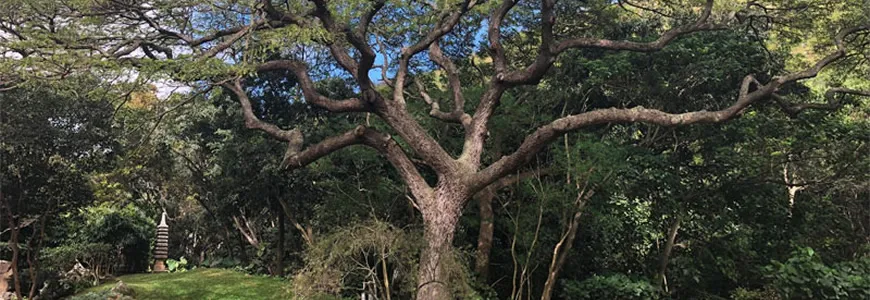
For ageing, on the other hand, they have the famous mizunara oak, which must reach 200 years of age before it can be felled. The wood is very porous and has a high moisture content; mizunara casks, as well as being hard to make, are prone to leaks, which is why they are often used for secondary maturation. These casks are particularly rare today and very valuable, partly because of the fierce competition between companies to secure them. Mizunara casks can give the spirit a particularly balsamic aroma, which, together with the meticulous care the Japanese devote to the smallest details, ageing included, produces an exceptional spirit.
Peated Japanese whiskies
Peat is a natural fuel used to fire the kiln that dries the germinated barley. As we saw in the article Which are the best whiskies? Let’s look for them around the world, peated whiskies are characteristic of Scotland. There, peat has always been used as fuel, partly for environmental reasons.
Depending on the degree to which this process is carried out, there are whiskies with different characteristics inherited from the peat; the fact remains that in Scotland peated whisky is a classic, which is not the case in Japan.
Talking about peated Japanese whiskies makes sense if we refer to the judicious use that Japanese distilleries make of this fuel: some of them use peat to give the whisky more elegant nuances, but it is not a defining feature of the spirit.
Most Japanese whiskies are not peated.
The best Japanese whiskies
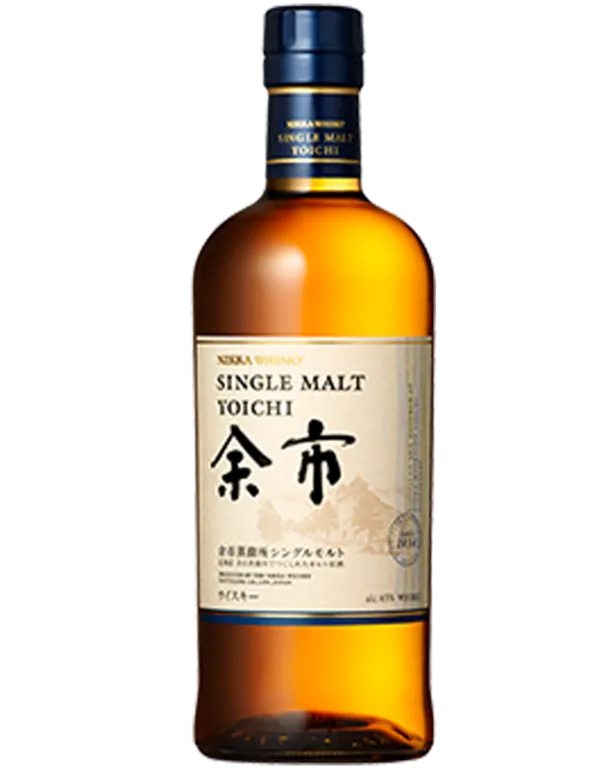
“The Best of the Best” was the award received for the first time by a whisky from Japan: the whisky named best in 2001 at the Whisky Magazine’s Awards was Yoichi. It was these accolades that marked a turning point in the history of Japanese whisky, bringing it into the global spotlight.
In such an exclusive landscape, which on several occasions has managed to stand out and even rank a notch above Scotch, every whisky deserves proper attention.
The distilleries in Japan have embraced a common cause – the regulations, incidentally, lay down precise rules for a whisky to be classified as Japanese – but each with its own character. Every Japanese whisky is defined by the imprint of the country’s art of distilling and by that of its own master distillers.
Among the best Japanese whiskies we cannot fail to mention Nikka Whisky, precisely because it comes from the distillery of the pioneer of whisky in Japan.
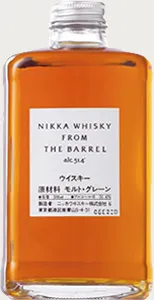
Among Nikka’s whiskies, the famous Nikka From the Barrel stands out, not least for the look and presentation of its bottle: a blend of malt and grain whiskies with a strong, rich taste, the former from Yoichi and the latter from the Miyahikyo distillery.
One of the best blends around, Nikka From the Barrel won the award for best whisky in its category at the World Whisky Awards in both 2007 and 2010. Intense, captivating and high in strength, this whisky never tires but surprises with its great persistence and oaky finish. On the palate the character of both the single malt and the grain comes through, on the nose herbaceous aromas and spice; this whisky, which rests in oak casks for a long time, is an icon of the Nikka production philosophy. It brings with it a richness and fullness of exclusive flavours.
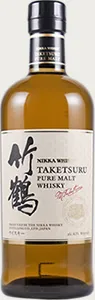
And, staying with the wonderful locations favoured by Nikka’s founding father, it is impossible not to mention Taketsuru No Age, dedicated to Masataka Taketsuru himself. It is a Japanese pure malt made from malt whiskies aged for an average of 10 years in different types of cask, including sherry.
This Nikka whisky is a powerful expression of Japanese quality and elegance, a spirit of great balance, elegance and aromatic richness. Its soul is 100% Japanese. The colour is a lovely bright, luminous amber; the aromas on the nose range from white fruit, such as peach and baked apple, to oriental spices; in the mouth it is immediately smooth and seductive, then suggests fragrant, fruity and spicy aromas, among which vanilla and fine woods can be detected.
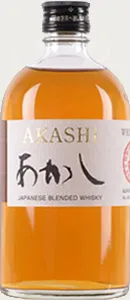
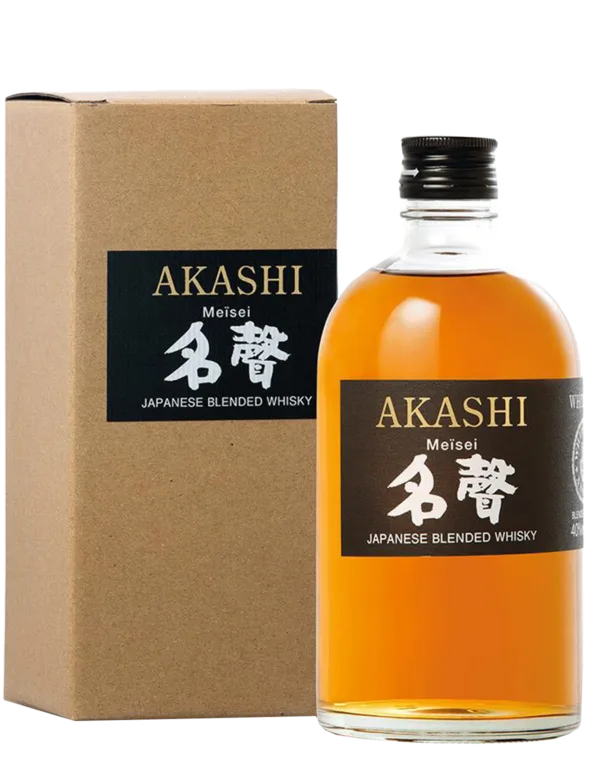
Akashi, from White Oak, is a Blended Japanese Whisky made mostly from grain whisky and to a lesser extent from malted barley. Known for producing sake and shochu, White Oak – or Eigashima – made only blended whisky until 2007. Akashi (named after the city where the distillery stands) is double distilled and aged for 3–4 years in oak casks. The whisky is authentic, very elegant and wholly Japanese in style.
It is golden yellow in colour, with a bouquet of light, very delicate hints and an intense, smooth taste. The finish is long and dry.
How to drink Japanese whisky
The way Japanese whiskies are enjoyed is not quite the Western way. Here we prefer to drink whisky neat, without ice; in some cases a few drops of water can be added to bring out the floral traits more.
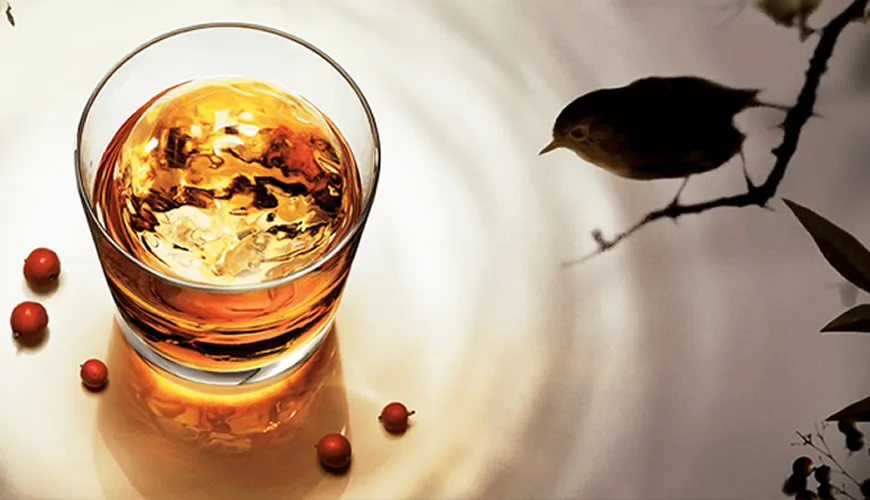
Drinking it on the rocks, on the other hand, is popular in many places in Japan, preferably with special ice cubes so that the whisky is not watered down; bartenders have even developed a true art of carving ice sculptures for this very purpose.
In Japan, whisky is also drunk as a highball or as mizuwari.
The first is a long drink made of two parts spirit, soda and ice, a time-honoured way of enjoying whisky at different moments and appreciating its flavour. Mizuwari, on the other hand, is a drink made from one part whisky and two parts water; it can also be found in versions with citrus, orange blossom or tea.
These different ways of drinking Japanese whisky are tied to customs around alcohol that are completely different from ours, and worth trying when visiting the Land of the Rising Sun to immerse yourself fully in the local culture.