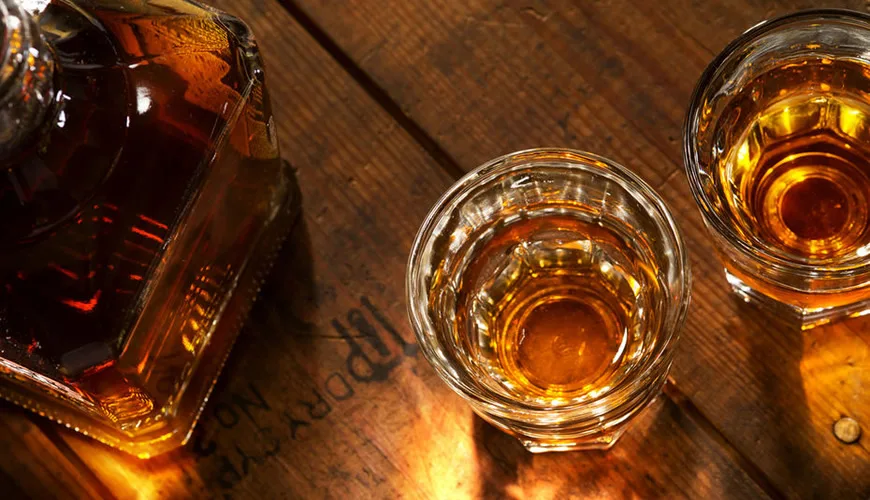
Whisky or whiskey? Scottish or Irish?
Its paternity is still disputed, yet for centuries the most famous spirit distilled from fermented cereals has been among the favourite drinks of connoisseurs. Scottish or Canadian “whisky”, Irish or American “whiskey”: the different name is essentially linked to where it comes from; whisky is still a product obtained from the fermentation of various cereals, barley in particular.
While it is easy to give a short definition of this spirit, finding your way among the many labels is more complex, as different types of whisky, however fine, differ in how they are produced and, as a result, in taste.
Let’s see how to find our way when choosing, and get to know the best whiskies currently on the international market: fine whiskies with different origins.
Scotch whisky
Scotch whisky is simply whisky from Scotland. To be called Scotch, a whisky must meet precise requirements laid down in a regulation of the British Parliament protecting Scotch whisky, issued at the end of the 1980s. Among other things, it prohibits the production of any other type of whisky in Scotland.
Although its name has only been protected since the end of the last century, the history of Scotch whisky is much longer. The distillation of grain spirits is mentioned even in documents dating back to the Early Middle Ages.
Let’s get to know Scotch whiskies better through three broad categories.
Single malt whisky
This is the best known of the fine whiskies. Single malt is obtained by continuous distillation of 100% malted barley. If even a tiny percentage of another cereal is added, the whisky cannot be called a single malt. The malted barley is then roasted in special kilns, often fired with peat.
Single malt Scotch whisky must be distilled in traditional copper pot stills and aged for at least three years and a day, all at a single distillery. So, if different casks with different ageing periods are used to make a single malt, all the whiskies blended together must be made at the same distillery. The age stated on the label refers to the youngest.
Grain whisky
Grain whisky is made from a mix of malted and unmalted barley. Compared with single malts, these whiskies have a shorter cask ageing and a less distinctive peat roasting.
Blended whisky
These are the most widespread whiskies, as they are among the most produced in the world. Blended whiskies are made from blends of different whiskies, both single malt and grain. They are generally known for a rounder, smoother taste that is easier to enjoy even for less experienced palates. Blended whiskies may use products from several distilleries.
Peated whisky: characteristics and suggestions
When the kiln used to roast the germinated barley is fired with peat, we speak of peated whisky.
Peat is a natural fertiliser that has always been used as fuel in Scotland: it plays an essential role in giving whisky its distinctive character.
The resulting aromas are generally smoky, but there are different levels of peating, which produce whiskies of very different character; every peated whisky has its own profile, linked to the aims and working methods of the distillery.
From the peated whiskies in our catalogue, we suggest a few Scottish icons of single malt Scotch whisky:
Oban 14 yo
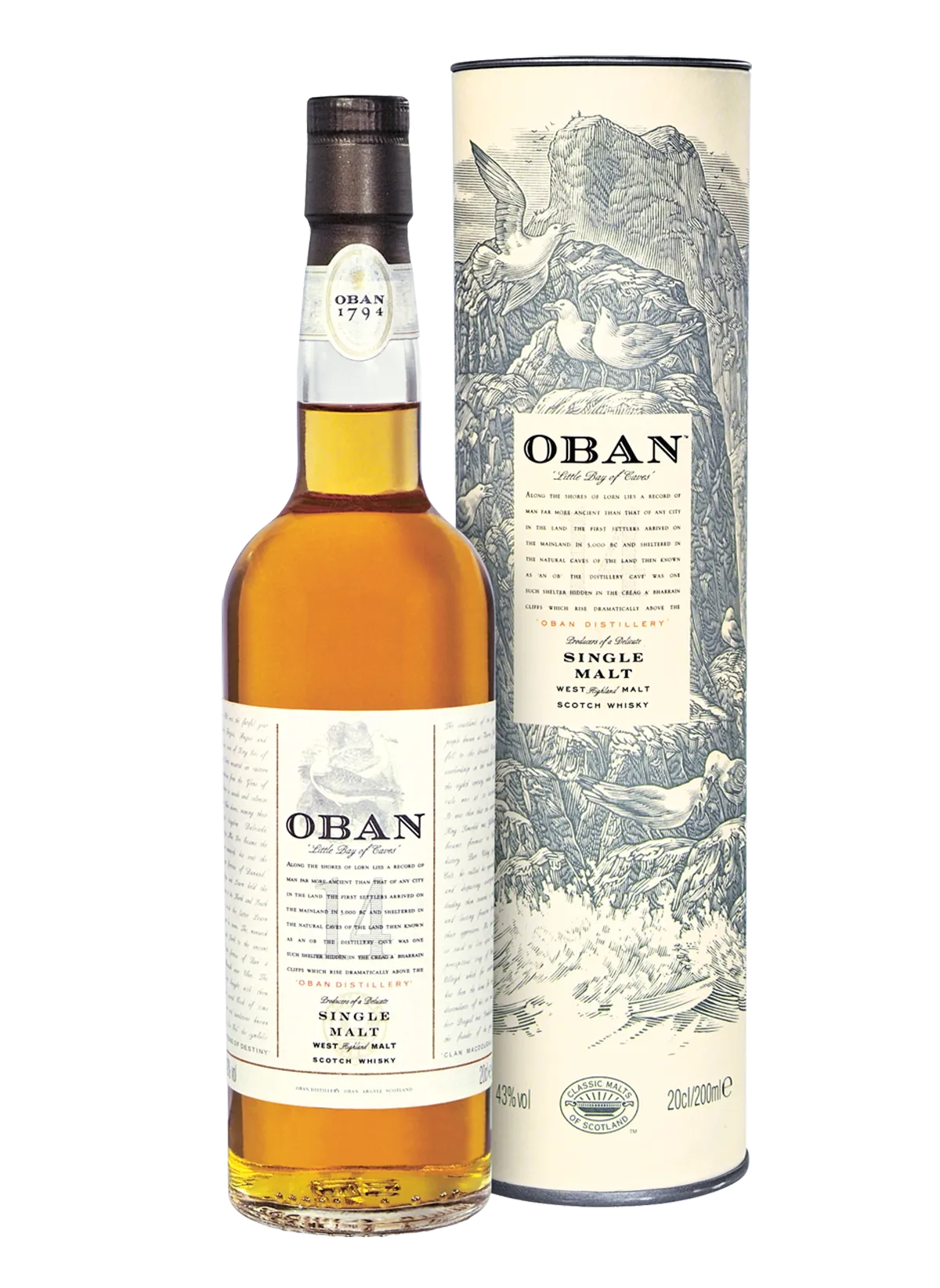
This is the whisky of Oban, one of the oldest distilleries in Scotland and one of the last remaining urban ones. It stands out for its classic maritime and malty hints and the smoky notes typical of the Scottish coast. It has a full, dense and complex taste.
Caol Ila 12 yo
Caol Ila 12 Year Old is the best whisky to discover the world of its exclusive distillery of the same name, maker of award-winning labels. It is a peated single malt that perfectly expresses the essence of Scottish tradition, a smooth and pleasant whisky.
Talisker 8 yo Special Release
A special version of Talisker, one of the best known and most appreciated single malts in Scotland. Part of the Special Release selection, it is a whisky with a strong, energetic character, like the Highland whiskies of old. Its intense flavour makes it a unique single malt for connoisseurs.
AD/04.21:03
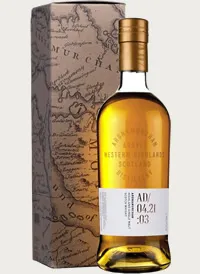
A Highland Single Malt Scotch Whisky produced by Ardnamurchan Distillery: extremely intense, fruity and remarkably balanced. The name AD/04.21:03 comes from the decision not to state the age on the label, so as not to standardise the whiskies produced over time. It is made from 50% peated and 50% unpeated whisky.
Irish whiskey
The “dispute” between Scotland and Ireland over the origins of this spirit is well known. Whiskeys, to put it the Irish way, share with Scotch whiskies the fact that they are made from malted barley. Irish whiskeys, however, also contain unmalted barley or other cereals. Much of the production also uses triple distillation.
In Irish whiskey the roasting takes place in copper kilns, without peat; the taste is certainly different from the bold, distinctive flavour of peated Scotch – it is smoother and lets you perceive the cereals when tasting.
In general, Irish whiskeys are cleaner and more approachable, even for those who are not devotees of the spirit; either way, they remain fine whiskies.
Japanese whisky
Japanese whiskies today fully deserve their place among the best whiskies in the world. They are exclusive in taste but, above all, in a personality and style able to compete even with the finest Scotch whiskies. This is thanks to a production philosophy that in less than a century has made its way internationally and onto the podium; its pillars are will, precision and dedication, the ambition to achieve excellence and the ability to hit the target – qualities typical of Japanese culture.
Whisky distillation in Japan has ancient roots: centuries ago this spirit was even made in people’s homes. However, it has only recently been sold in the West. And it is remarkable how Japanese whiskies have managed to win world-class titles in a short time, despite the dominance of Scotch.
Japanese whisky is made by distilling cereals; its production is inspired by the Scottish method but with substantial differences that give it a unique character, reflecting its territory and culture of origin.
Particularly important elements in the process are the clarity of the water sources and the very different seasonal climate. In addition, maturation generally takes place in casks made of a special wood, mizunara, an oak of Mongolian origin that gives the whisky a truly unique aromatic profile.
Below are some Japanese whiskies from our catalogue.
Taketsuru Pure Malt
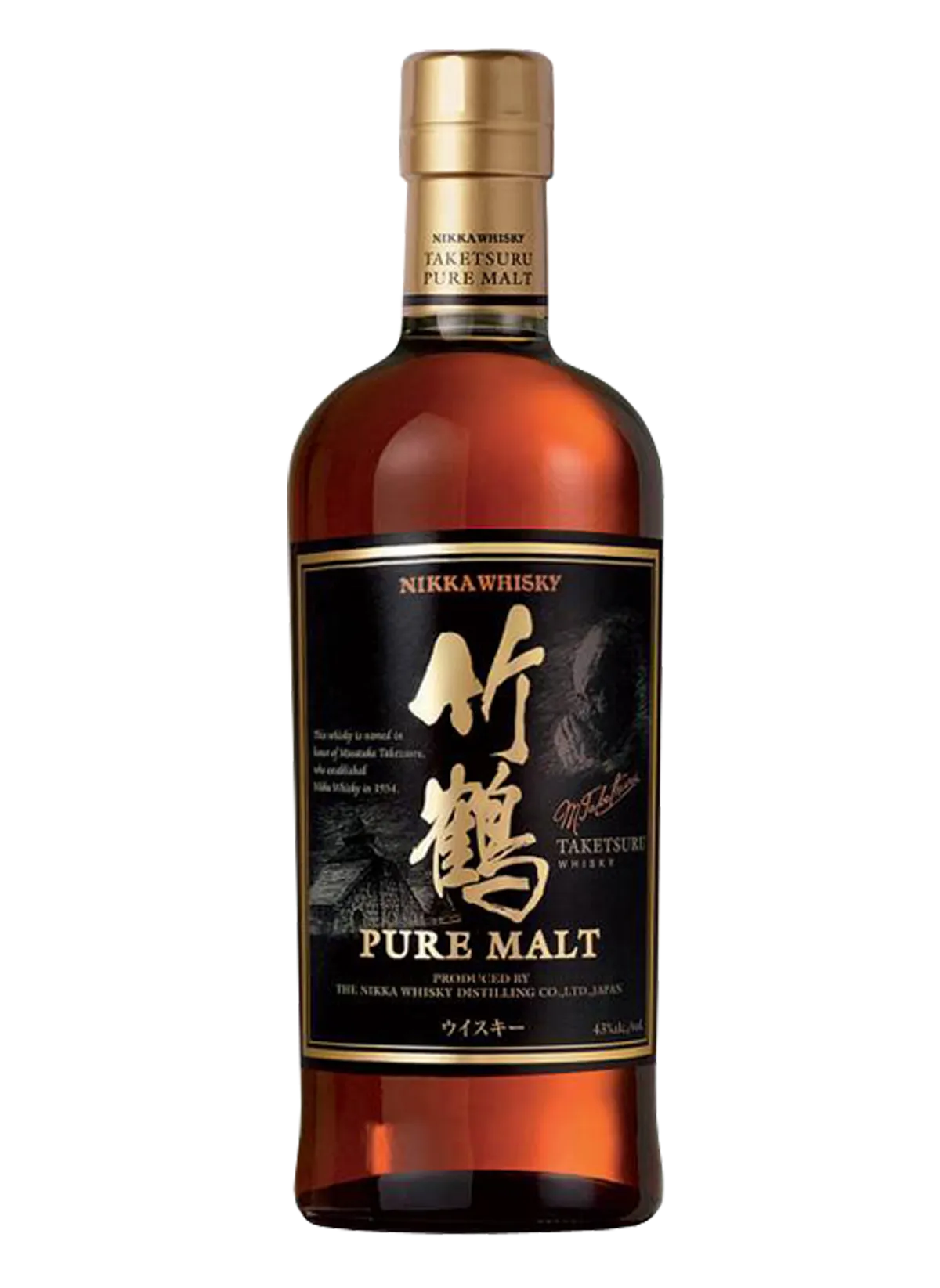
A blend of single malts, Taketsuru is a tribute to the founder of the Nikka distillery, who set Japanese whisky on its path to worldwide growth. It is a fine whisky with a rich aromatic profile, a great example of the Nikka production philosophy, and it won the title of best blended malt whisky at the World’s Whisky Awards.
The Tottori Blended Whisky
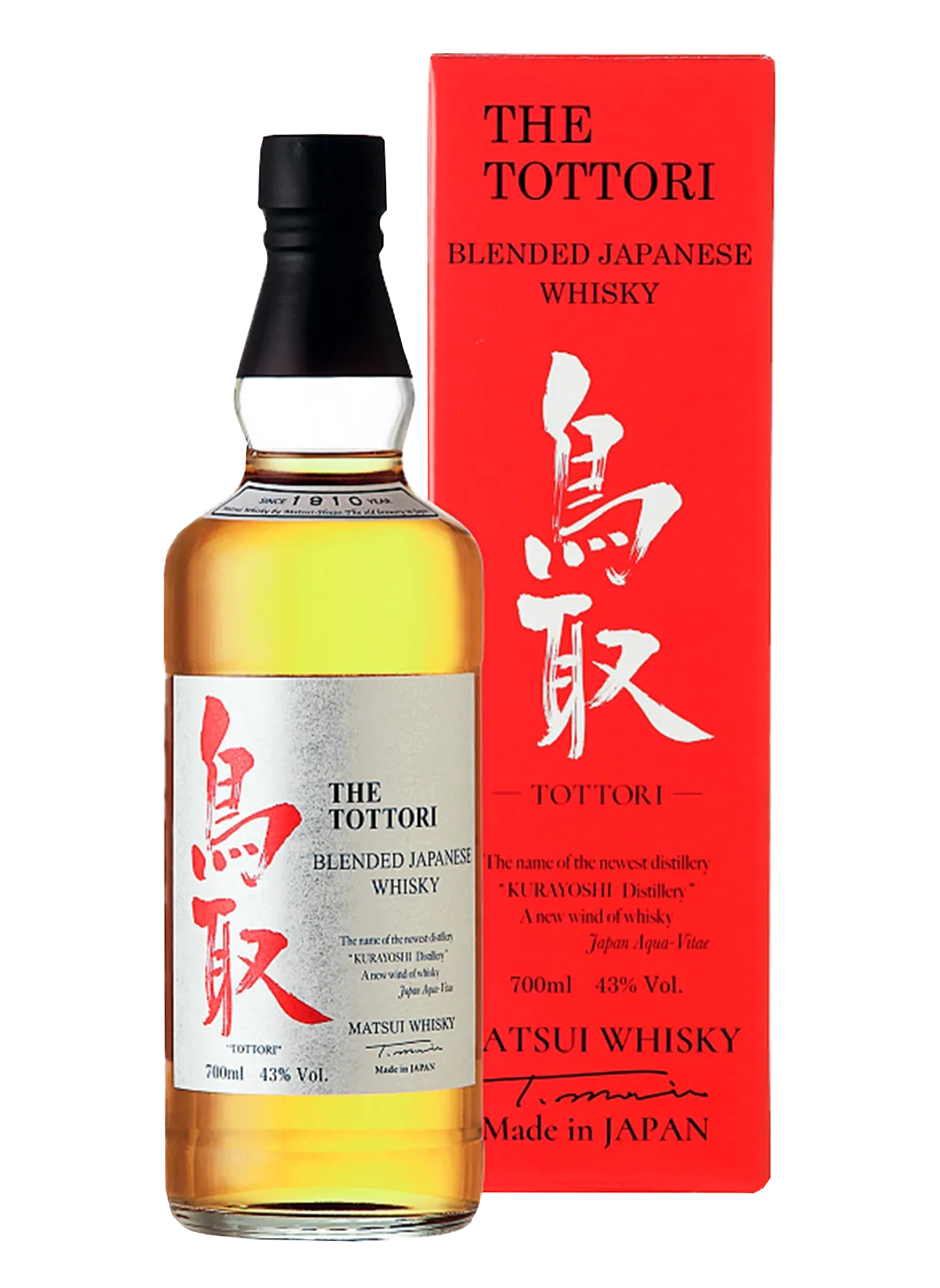
With an aromatic flavour of spices and red fruit and a woody finish, The Tottori is a blended whisky from Matsui, a Japanese distillery active for over 100 years and today a world benchmark for the quality of its fine whiskies, among the best in Japan and beyond.
Miyagikyo Single Malt
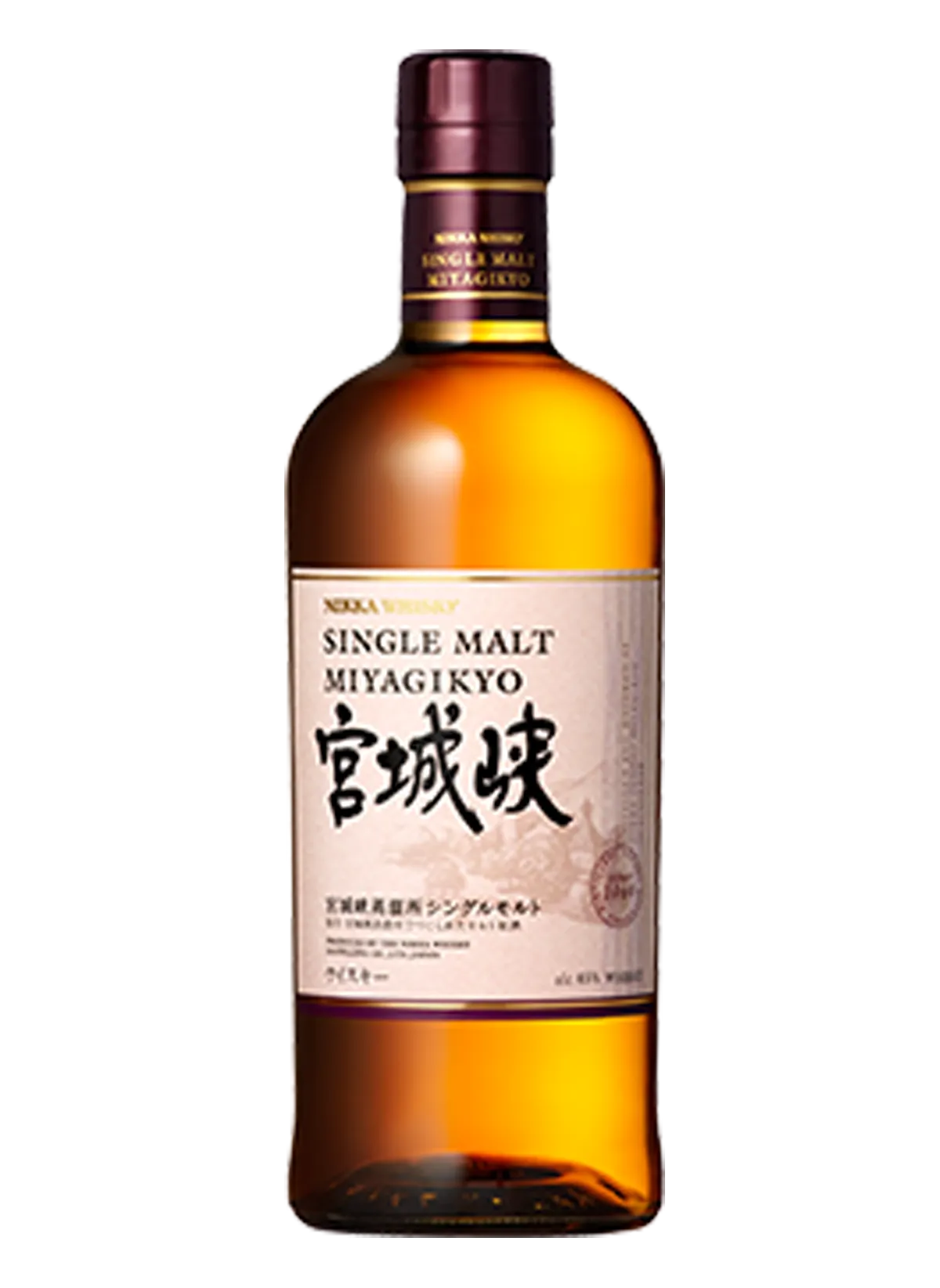
An outstanding single malt, another exclusive from Nikka whisky. It stands out for its long production and slow distillation, with ageing in ex-sherry casks: Miyagikyo has special sensory qualities, delicate and surprising.
Hinotori Blended Whisky
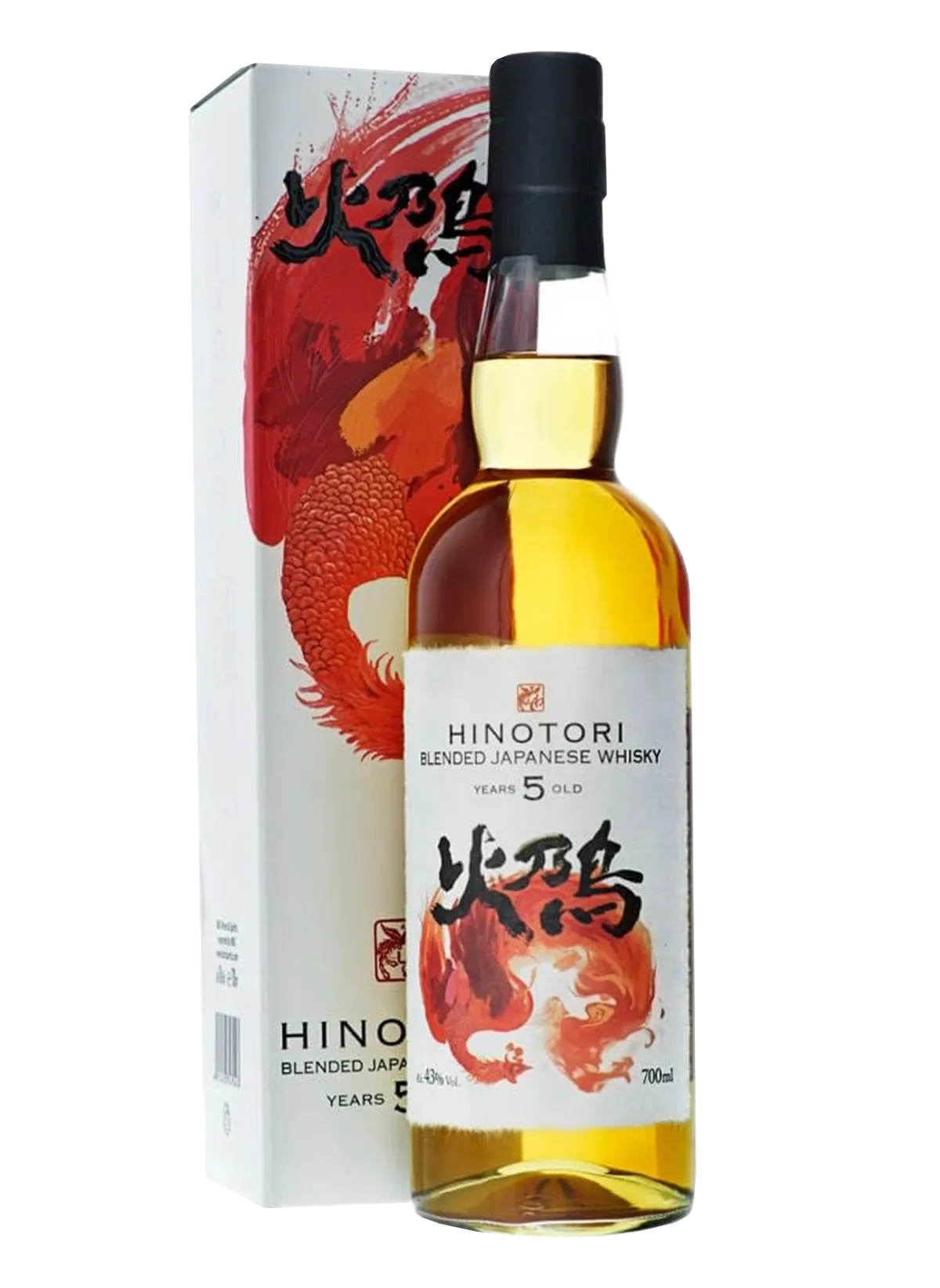
A blend of grain and malt whiskies, aged in American oak casks for 5 years, Hinotori is an exclusive blended whisky produced to mark the 70th anniversary of the distillery of the same name. It is a fine whisky with a strong personality, made in a limited edition.
American whiskey
American whiskey is made from cereals, in particular corn and rye. Its production has roots in the Scottish and Irish art of distilling; it was in fact started by settlers who, lacking barley and wheat, used the cereals of the New World for distillation.
To this day, the variety of raw materials used for American whiskeys makes them a well-assorted range of spirits, with different characters and tastes, many of them ranked among the finest in the world.
American whiskeys include bourbon and rye.
Bourbon whiskey
This is the best-known type of whiskey in the United States: bourbon comes from Kentucky and is very different from Scotch and Irish whiskey.
Sweeter and rounder in taste, bourbon is made by a production process that first of all uses mainly corn; according to US standards, a whiskey can only be called bourbon if at least 51% of the mash is made up of this cereal. The water must also be 100% natural, and only the purest demineralised water may be added.
Another substantial difference from European whiskies concerns the casks. American bourbon is aged in new oak, which contributes greatly to the sweeter, rounder flavour of this type of whiskey.
Rye whiskey
In rye whiskey the base changes: at least 51% of the mash is rye. It is also very popular in Canada, where, however, rye can be present in any percentage.
Rye whiskey also has a different history from its close relative, bourbon. During Prohibition it grew enormously, because rye was easier to produce and was widely grown and distilled. When those years ended, however, the arrival of new spirits from abroad brought a change in tastes that pushed this whiskey to the margins.
Today, however, together with bourbon, rye whiskey is back among the favourites of spirits lovers.
Below are our American whiskey picks:
Us*1 Small Batch Bourbon
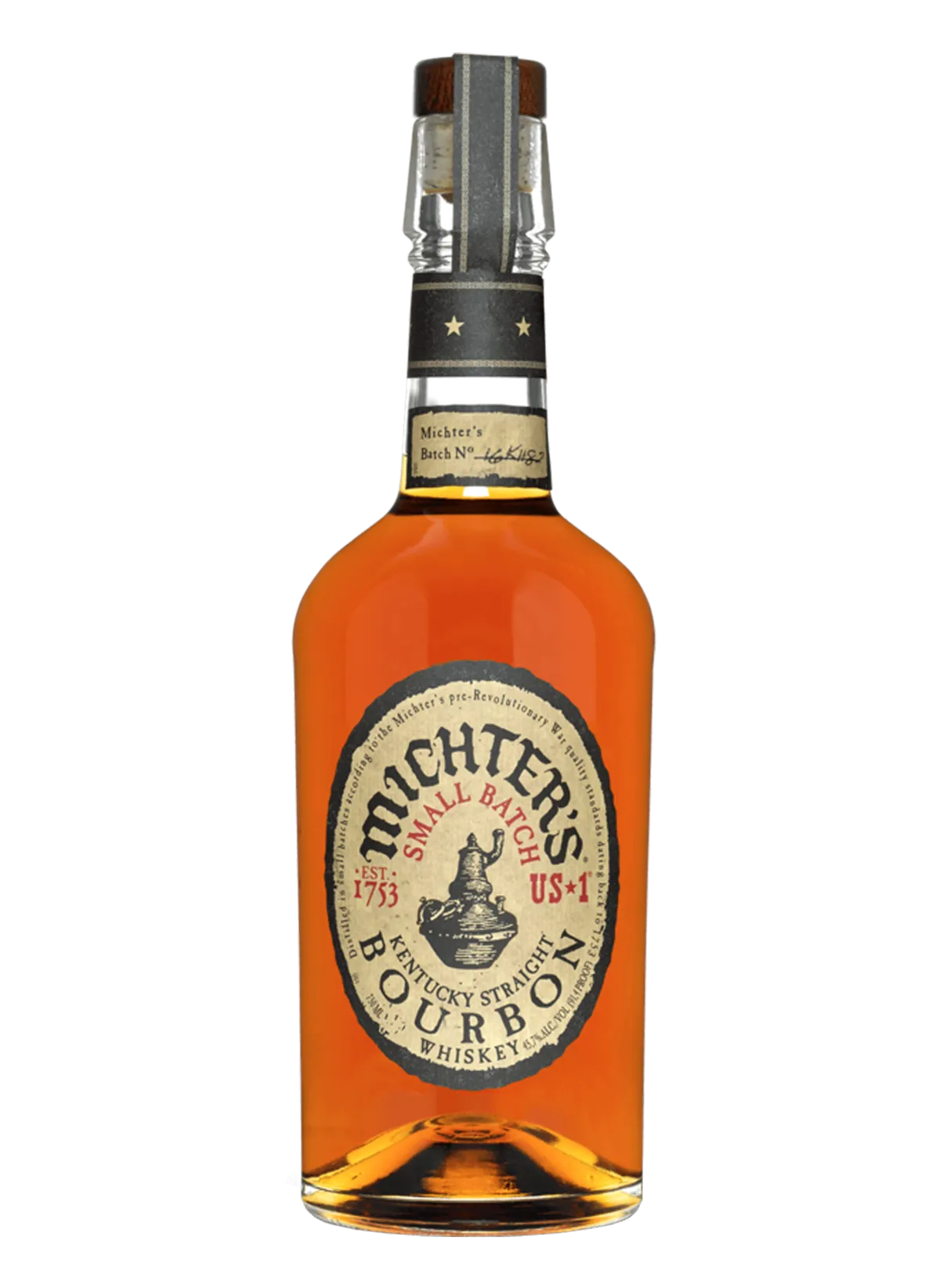
Made with the finest American corn and in limited quantities, Small Batch is aged in casks of the very highest standard, fully in keeping with the Michter’s way. It is a whiskey with clear hints of caramel and vanilla.
Us* American whisky
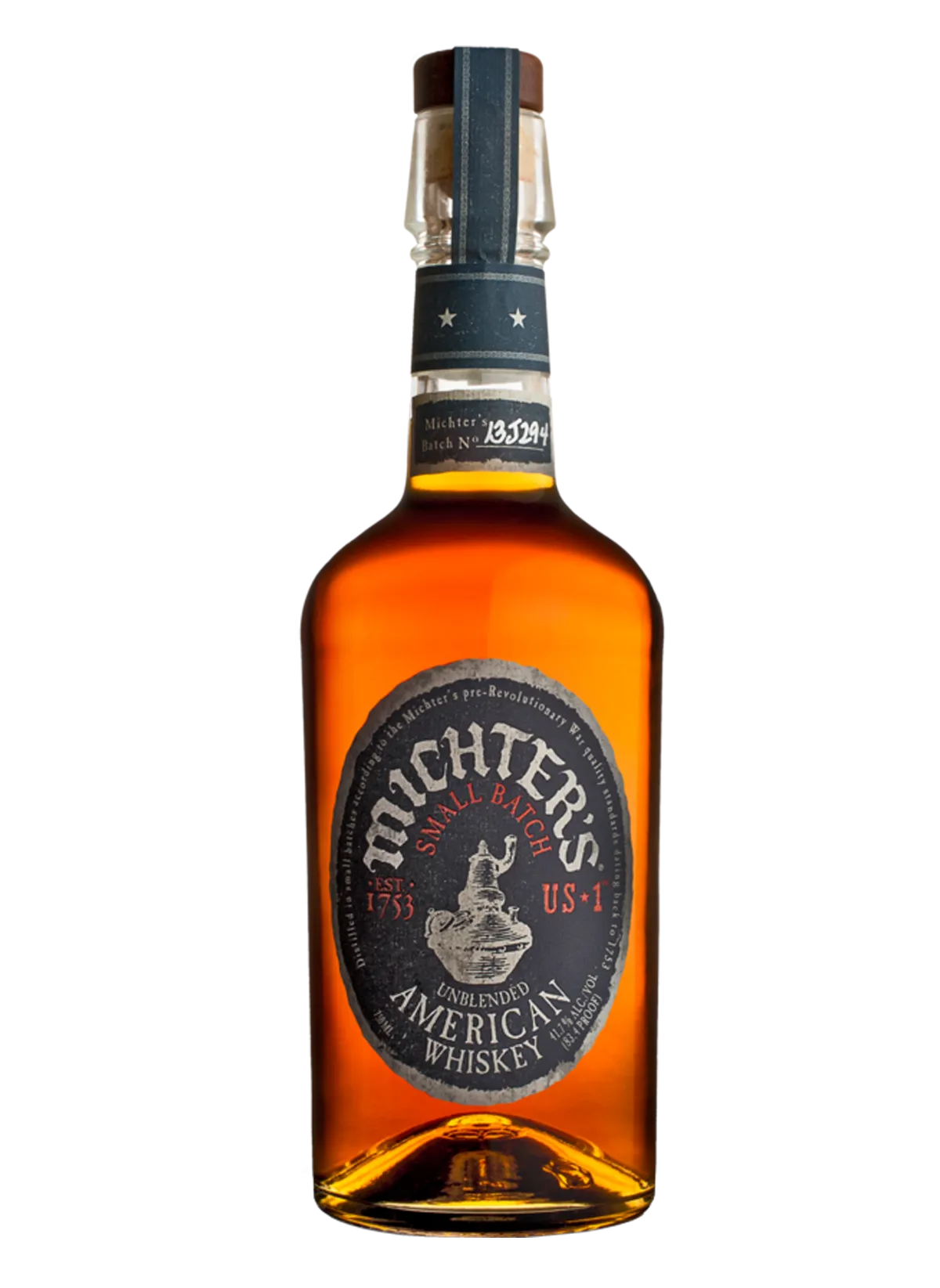
Aged in whiskey-soaked bourbon casks, American Whiskey develops a truly rich and pleasant aromatic profile. It too bears the signature of Michter’s, a distillery founded as far back as 1753.
Rye Bulleit
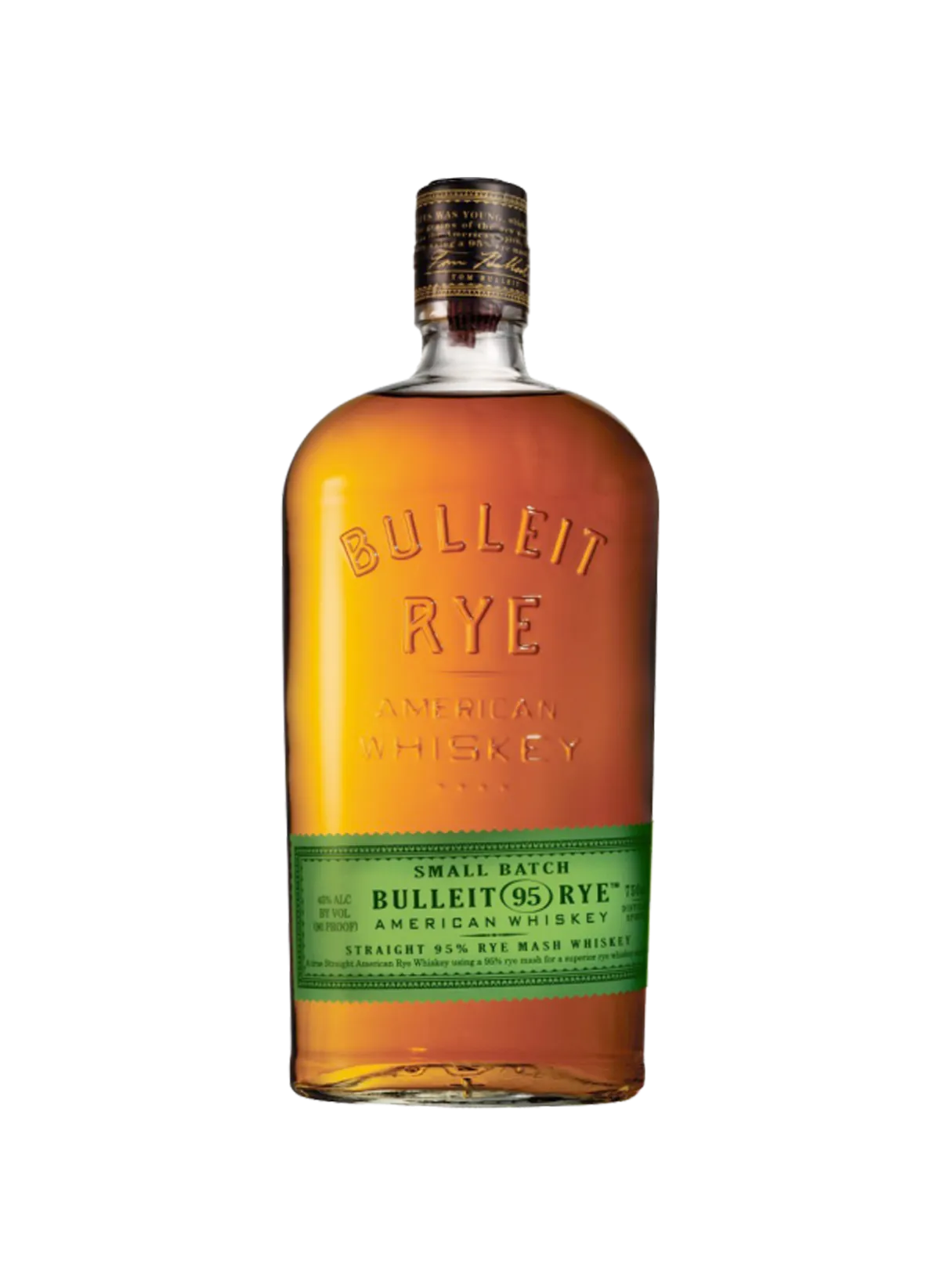
It is one of the most highly regarded rye whiskeys in the world. Rye Bulleit is a clean rye whiskey that stands out for its great complexity and for a quality that ranks among the best available on the market.
Bourbon Bulleit
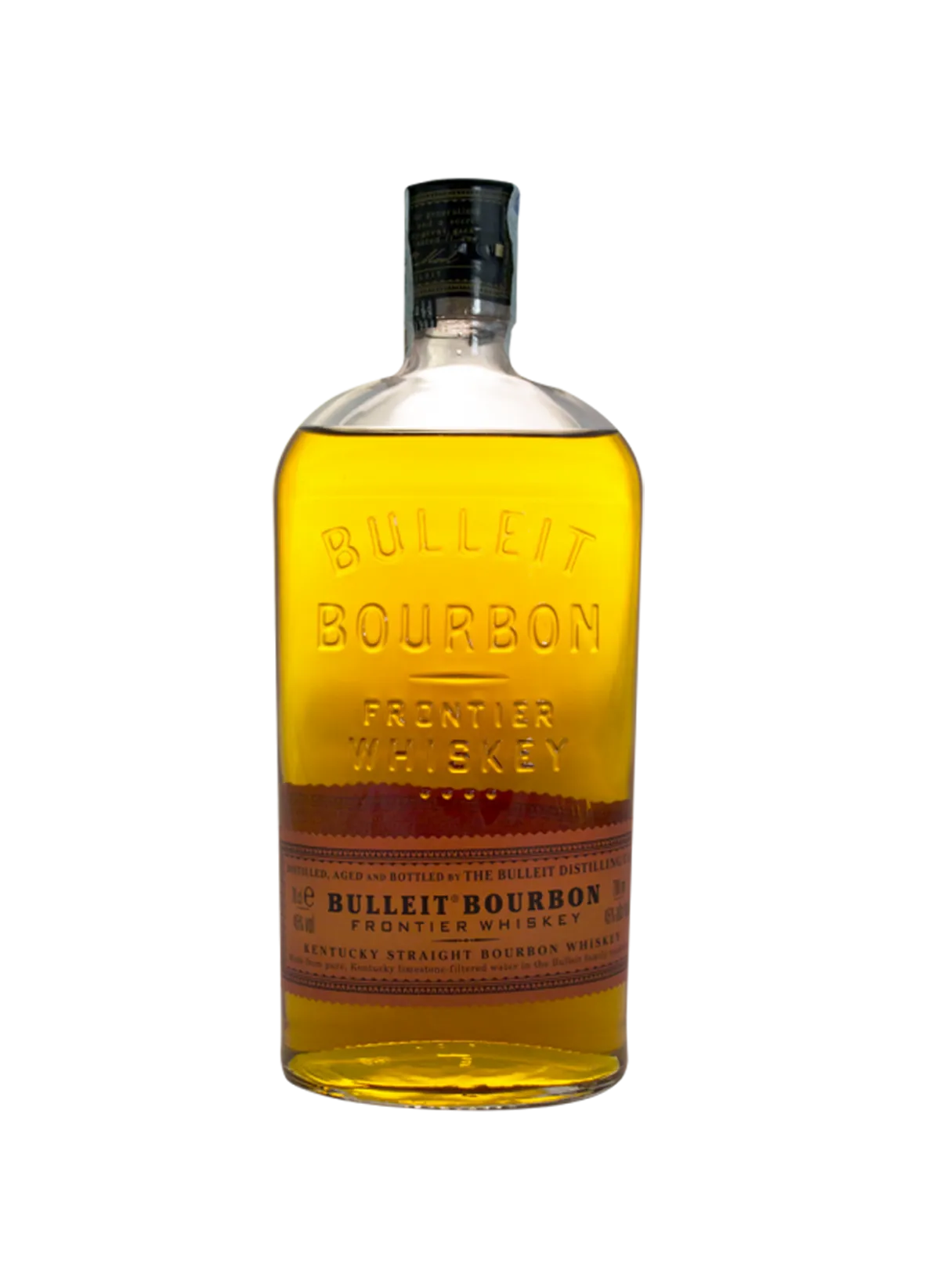
Inspired by the first whiskey made by Augustus Bulleit, this bourbon is made from top-quality rye together with other cereals and the mineral-rich water of Kentucky. It is a whiskey with a clean, long finish.
Between Scottish, American and Japanese whiskies, the choice largely reflects personal taste; you can read more about each whisky on its product page: either way, yours will be a fine whisky!