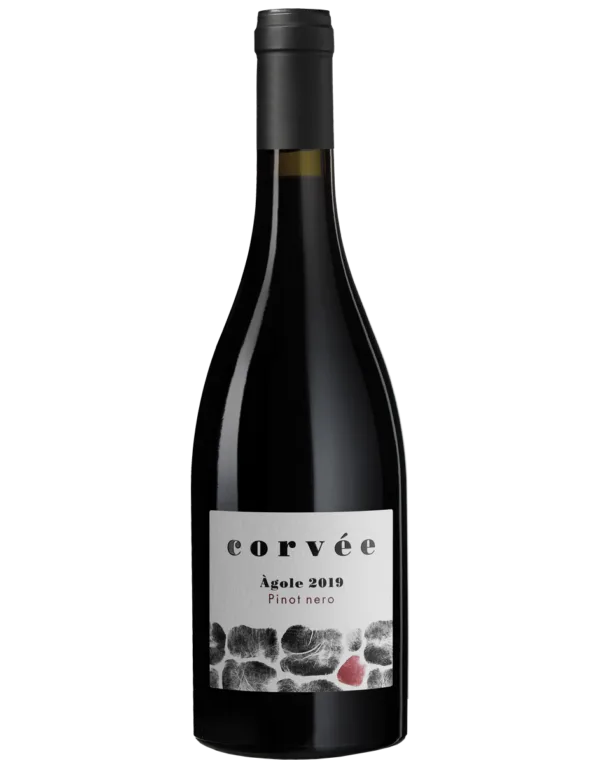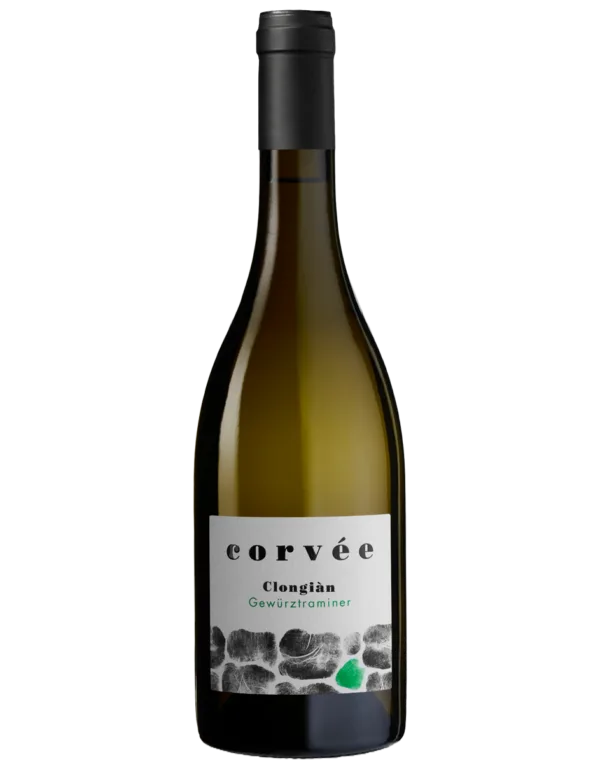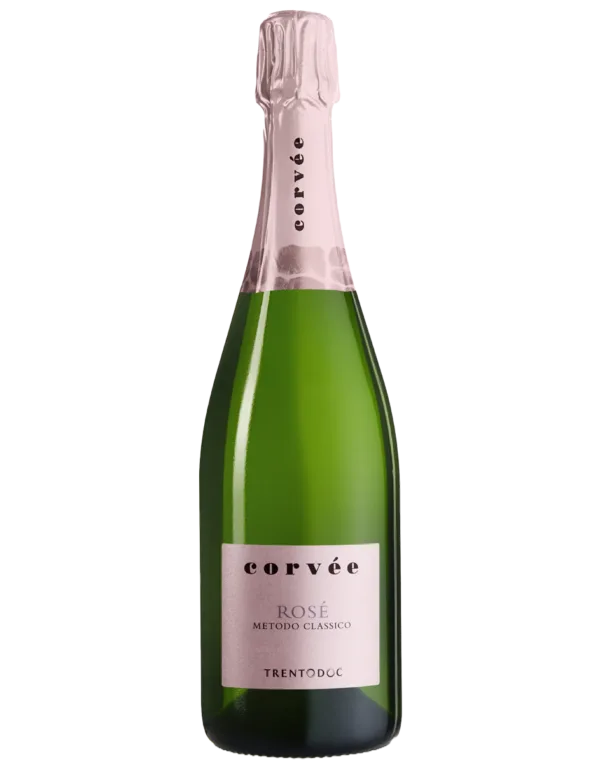
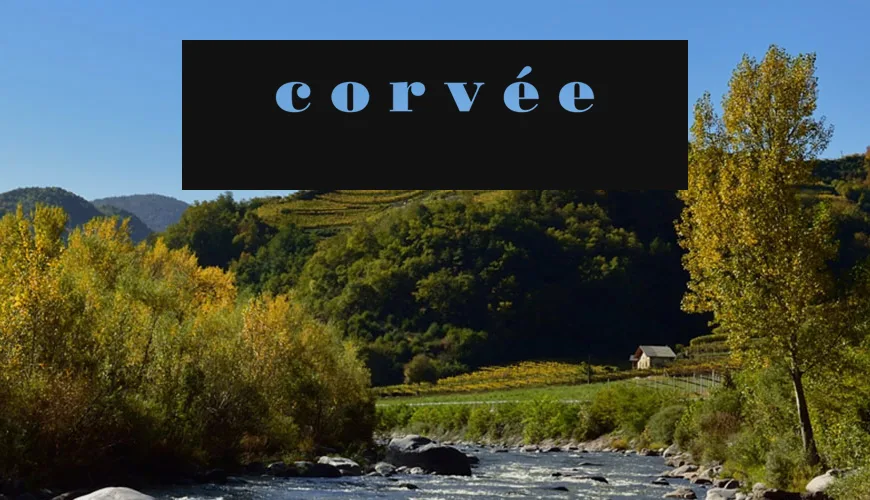
Eighteen hectares of vines committed to a sustainability project for a DOC that still has so much to express: we are in Trentino, in the Valle di Cembra, where a new interpretation of history and territory comes to life in the work of Corvée. This is mountain viticulture that captures every nuance of its land and gives it back in wines of great depth and complexity.
Corvée wines are born of modern, meticulous growing methods and of a production philosophy founded on cooperation and on faithfulness to the rules of nature.
Energy, richness, wonder: the virtues of the territory that Corvée wines speak for are many, and what better way to discover them than by tasting? Let’s get ready for a perfect, more mindful sip, thanks to our meeting with Moreno Nardin, winemaker and president of Corvée, whom we asked to tell us a little more about this exclusive and fascinating Trentino winery.
Here we are, Mr Nardin, and thank you first of all. We are truly pleased to share the story of Corvée in the words of the person who brought the company to life. Let’s start at the beginning: how did Corvée come about?
Corvée came about because five friends, later partners, wanted to pool their professional skills, their expertise and their vineyards, eager to tell the story of both themselves and the land they come from through wine. The initiative drew strength from an awareness of how naturally suited the territory, the Valle di Cembra in Trentino, is to growing vines, and from the professionalism of those who have worked its vineyards every day for generations out of passion. Alongside the essential and indispensable value of the vineyard, a sine qua non for bringing any wine project to life, from the very start Corvée has shared the project with professionals in winemaking, marketing and sales.
Bringing friends and relatives together in a limited company that is the heart of an out-of-the-ordinary production is quite a story; why do you release your wines 2 or 3 years after the harvest?
The fact is that oenology was born and developed not so much from making wine as from the human desire to preserve it over time. If we think about it, a winemaker invests far more of his technique and professionalism in managing ageing than in the birth of the wine. The desire to steal days from slow, gradual ageing is as strong as it is true that wine is the mirror of the human soul. At Corvée this innate inclination to preserve a memory of past harvests is even more evident in the awareness that wine is the poetry of the land. The mountains, the intimate expression of Trentino wines, are undeniably the most adolescent of all the landscapes our planet offers us. They are still moving, a little cheeky, unpredictable, full of contrasts, not yet fully shaped. Mountain wines are just like that, a little like the people who live there: full of energy, supportive, fearless, yet at the same time introverted and shy, opening up and revealing themselves a little at a time. They need time to express all the energy and richness that belong to the mountains, to the Alps.
Do you do everything in-house, or do you also use outside consultants for the winemaking side?
Corvée knows that several people gathered around a table help to find the right paths to express the different souls of a winery at their best. While relying every day on in-house professionals in viticulture, winemaking and marketing, Corvée pursues a continuous and expanding search for new, cutting-edge techniques and solutions, sharing experience with universities and oenological laboratories, experts in georeferencing and precision agriculture, consultant winemakers and agronomists, and lecturers and researchers in organic and sustainable viticulture.
Corvée has always cared about environmental sustainability and organic viticulture. What practices and techniques do you use to keep this up?
Corvée manages its whole estate, now 18 hectares, according to the protocols of organic viticulture. Our choice to manage our vineyards according to paradigms of environmental sustainability rests on three principles that matter a great deal to us. The first is that today there is no more correct viticultural technique for making wines that express their territory than the one practised in organic viticulture. The premise is that as few external factors as possible – synthetic molecules – should be brought into the vineyard system, since they can in some way disturb and at the same time standardise production. Organic farming bases all its success on the ability to develop a substantial, strong root system. A vine firmly anchored in its soil lives better, is more in tune with its habitat, is healthy and has an efficient translocation system. In a nutshell, all this means bunches with a strong imprint of their territory. The second reason Corvée farms organically is the realisation that in the shadow of the Dolomites, a natural heritage of humanity, and in a terraced landscape, the Valle di Cembra, part of Italy’s historic heritage, the first to invest in environmental sustainability techniques and in maintaining soil fertility must be the winegrowers. The last aspect, but no less important, is that it falls to the young to take on the task of developing new growing techniques and approaches in an area where viticulture, and the tradition tied to it, is lost in the mists of time. Corvée’s partners and winegrowers, all in their thirties, have the task of teaching and spreading this new way of growing, modern and extremely attentive to the laws of nature in their territory.
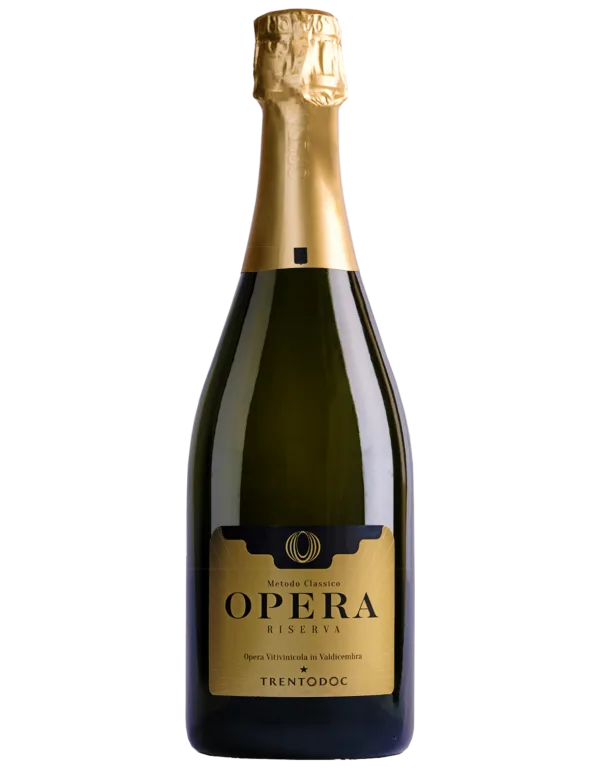
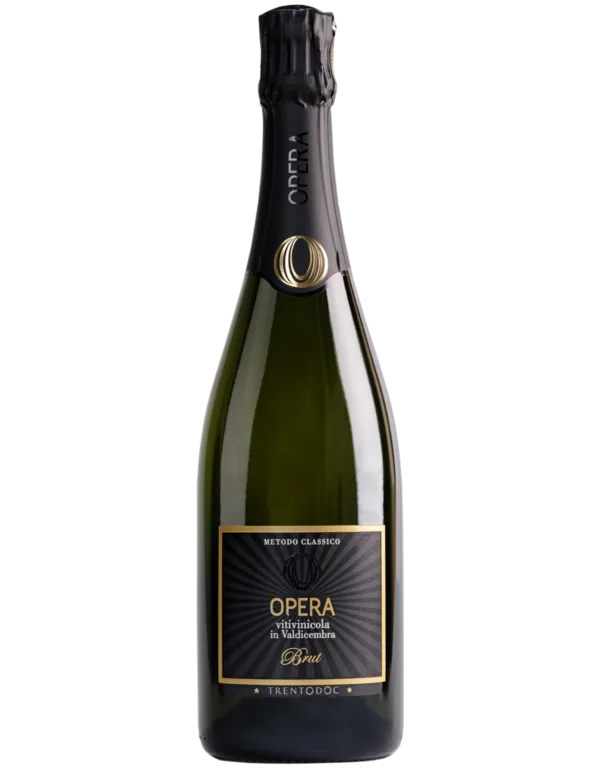
We know that Corvée, in addition to its mountain wines and its two Metodo Classico sparkling wines, has taken over Opera. What led you to invest in this new project?
Entirely devoted to Metodo Classico sparkling wine, Trentodoc, Opera is based in one of the most important areas in Trentino for sparkling wine production: the Valle di Cembra. Its porphyritic, calcareous and sandy soils, rich in minerals, together with favourable climatic conditions that preserve the acidity of the musts, were the foundation of this company’s commercial success. Founded almost by chance by a group of friends passionate about Metodo Classico sparkling wines, it achieved major commercial success in a short time, about 5 years: around 50,000 bottles, all recognised for their high quality. Aware of the work already put in by this “sparkling wine house” and of the extraordinary quality of its sparkling wines, Corvée saw in Opera the chance to tell the story of the Valle di Cembra through aged Trentodoc, with more than 60 months of ageing. So it is a company in its own right, with its own history and its own philosophy, which Corvée intends to respect, seeking to enhance it with the seriousness and professionalism that mark all of Corvée’s work.
Let’s talk about medium to long-term goals: what do you expect from the future?
Corvée wants to keep investing in techniques and protocols for managing its vineyards and its winery, with the aim of enhancing its wines. This is the goal that drives Corvée’s work every day. With the help of leading oenology universities and researchers, we would like to improve the management of the grass cover in our vineyards by introducing less invasive species and grazing animals such as sheep and donkeys. We also want to open our spaces to consumers, who are ever more eager for information and knowledge, and so imagine Corvée as a place everyone can enjoy who wants to discover the stories and traditions of our territory. That is why in recent months we have invested heavily in spaces for meeting, tasting, reading and carefree moments in the company of excellent wines.
We would like to end with a suggestion from you: what would you recommend to our readers, and to lovers of fine wines in general, for 2021?
Far be it from me to name specific labels which, for me at least, represent the pursuit of the highest quality expression of a given territory in a given vintage. There are so many of them in Italy and around the world. I will therefore stay at a more general level, but perhaps an even more important one, which I am sure will inspire all of us wine lovers who, in this difficult 2020, have understood how vulnerable our planet is. So look for singular, genuine wines, intimately tied to their territory. Put the global at the service of the local, and set identity against standardisation.