Doubt is wise, but at the table a few certainties are better: with fish dishes a white wine is always welcome. Although some reds also hold their own with the flavours of the sea, when the lightness of a white meets the delicate taste of fish, it is love at first sight – and not only between the two of them. Be careful, though: mixing feelings and food can lead to uncertainty, so never choose the wine at random.
Simply saying “white” is not enough, because every fish has its own properties, every cooking method its own character and every dish its own white wine. And Italy is full of whites, with regional heritages suited to every occasion.
All you have to do is bring these treasures out and discover them: excellent white wines are hidden in the least likely regions.
Would you look for them in the Langhe and Roero? Exactly: in Piedmont, the emblem of the finest red grapes, lie white wines for elaborate dishes and refined palates.
Piedmont white wine is synonymous with quality. We can trust it – the history and the accolades of the reds confirm it: Piedmont plays a leading role in the growth of Italian winemaking around the world. The region boasts a surprising range of IGT, DOC and DOCG whites, in which even the simplest table wines often have qualities comparable to the great DOCGs. The continental climate guarantees it: long, cold winters bring fog and steady rainfall, and hot summers considerable humidity.
Piedmont white wine is born on the foothills that give their name to the largest region of the Italian peninsula. Piedmont has a deep-rooted winemaking tradition and a well-defined oenological identity, so much so that Piedmont’s red and white wines hold a prominent place among the best Italian wines.
Although the top of the experts’ rankings is usually occupied by fine Piedmont reds, Piedmont white wine is climbing ever higher thanks to its wide range of nuances, much appreciated internationally.
The Langhe and Roero areas, famous for great reds such as Barolo and Barbaresco, are also the cradle of fine white grapes such as Arneis and Cortese, and of the more traditional Chardonnay – all varieties that, each on its own, give rise to outstanding Piedmont white wines.
Each on its own, because Piedmont’s white wines, like many of its reds, are single-varietal: this gives them a strong personality and makes them clear-cut and emotional, since the grape they come from is just as exclusive. Wines like these, paired with fish dishes, will make your head spin – but only figuratively.
Let’s start with a few pairings to discover much more about Piedmont’s whites, from terroir to appellations and wineries:
- Arneis, the Roero grape for a “seaside” aperitif
- Cortese, the white from Gavi that wins over shellfish
- Chardonnay: decant, then serve the pasta course
- The terroir of Piedmont wine
- Piedmont white wine: the main appellations
- Other typical Piedmont wines:
Arneis, the Roero grape for a “seaside” aperitif
Arneis is the favourite grape variety of the Roero, the area in the north-east of the province of Cuneo, separated from the Langhe by the Tanaro river. This variety has a deep bond with its land, so much so that it is often also called Arneis Roero. Its history has not always been idyllic, however: after many centuries of excellent production, the crisis in viticulture between the two World Wars struck this variety a near-fatal blow. Only a few decades ago was Arneis rescued and made once again one of the finest white grape varieties in Piedmont.
Arneis gives white wines of great elegance.
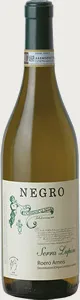
The Serra Lupini from the Negro estate is a Roero Arneis DOCG that is persistent, with a savoury, mineral finish typical of the Roero’s sandy soils. A pleasant, approachable wine that fully represents the winery’s tradition; the Negro family was one of the first to vinify Arneis dry, starting in 1970.
On the nose Serra Lupini shows notes of yellow-fleshed fruit, dominated by peach and pear, together with hints of acacia blossom and tropical fruit; its colour is an intense straw yellow.
It is an excellent companion to seafood dishes, crudo and puréed vegetable soups.
Cortese, the white from Gavi that wins over shellfish
Cortese is born and stays in the province of Alessandria: it is in Gavi that it finds its fullest expression. After years of flourishing cultivation, in the 1800s Cortese too fell victim to phylloxera, an insect that in those years devastated most of Europe’s vines. Once the crisis was over, the growers of Gavi gave their grape back its identity and began a production that has everything it takes to become one of the best.
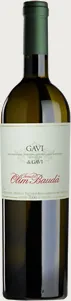
Time has proved it: from Cortese comes the wine of the same name, Cortese di Gavi, a Piedmont DOCG white. From sustainable farming with no chemical weedkillers, this Piedmont white is fresh, graceful and well structured.
Made with modern technology and respect for tradition, like the best Piedmont wines Cortese di Gavi is synonymous with absolute quality. It has a straw-yellow colour and lightly floral aromas.
We pair the intensity and good persistence of Tenuta Olim Bauda’s Cortese with shellfish or full-flavoured fish dishes.
Chardonnay: decant, then serve the pasta course
Chardonnay is a very versatile grape: its origins are French, but today it performs exceptionally well throughout the sub-Alpine area, as well as in Tuscany and Sicily. Depending on the climate and the land where it is grown, this variety gives wines of differing structure and aromatic character. In Piedmont Chardonnay finds conditions that favour its production: it has been grown here for many years, and it gives a Piedmont white wine that is light and harmonious in taste.
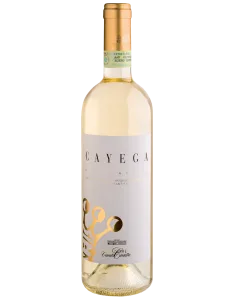
The Chardonnay made by the Gaya winery has great character: a complex white with citrus aromas and an elegant personality, to be decanted for about an hour and then served with delicious fish-based pasta and risotto dishes.
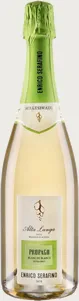
Particularly fine and elegant is the Alta Langa Chardonnay from the Enrico Serafino winery, Propàgo. Straw yellow with golden highlights and a fine, persistent perlage, Propàgo is broad and inviting yet delicate, with hints of linden blossom, citrus, honey and mineral notes.
It stands out for the special harmony between nose and palate, where it is complex, vertical, dry, elegant and intense. The rich texture is crisp and the finish offers a long mineral aftertaste.
A 100% Chardonnay, excellent as an aperitif with fish and shellfish.
The terroir of Piedmont wine
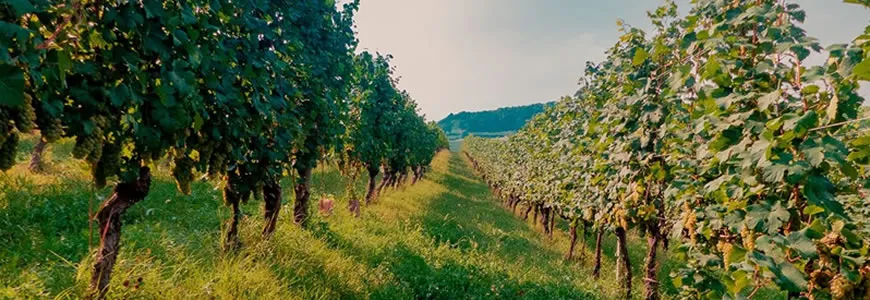
Piedmont wine would not have such organoleptic qualities without the region’s particular terroir. The alternation of mountains and hills, the continental climate with marked temperature swings and good exposure help even late-ripening varieties such as Nebbiolo to ripen; these factors are also responsible for the typical structure and longevity that Piedmont wines enjoy.
Some areas that, more than others, have become famous for the quality of the wines produced there are:
- the Langhe: the wines of the Langhe are renowned the world over. Anyone looking for a fine Langhe wine can choose among great labels of Barolo, Barbaresco and Nebbiolo, all famous Piedmont wines prized for the remarkable qualities that come from the rich terroir where they are made.
- the Roero: an area particularly well suited to winemaking, where Arneis is produced. As well as the Piedmont white Arneis, the area also produces Roero, which holds a Denominazione di Origine Controllata.
- the Vercellese, the area that produces Gattinara, a typical Piedmont wine and the only one in the Vercelli area with DOCG status, and Erbaluce di Caluso, a Piedmont white wine with a Denominazione di Origine Controllata, made in white, passito and sparkling versions.
- the Monferrato: among the wines of the Monferrato, well-known Piedmont red wines stand out for their quality, but so do excellent Piedmont whites made from local and international varieties. To name just a few wines from the area: Barbera, Grignolino, Freisa and Malvasia di Casorzo.
Piedmont white wine: the main appellations
Many Piedmont white wines are made from grapes grown on the foothills: Arneis, Chardonnay, Cortese, Erbaluce, Barbera bianca, Favorita, Malvasia, Falanghina, Pinot Bianco, Pinot Grigio, Riesling, Timorasso, Moscato, Nascetta.
In total, Piedmont counts 14 DOCGs. Among the Piedmont whites that hold the appellation we find many famous names:
- Asti and Moscato d’Asti: two styles made from the Moscato grape but very different from each other. Asti is a sparkling wine made with the Martinotti method (named after the Piedmontese oenologist who invented it) and has a sweeter taste and a richer perlage than Moscato d’Asti.
- Gavi or Cortese di Gavi: made exclusively in the province of Alessandria in three different styles: still, frizzante and sparkling. It has a clear colour and a generally very delicate bouquet; it is a pleasant wine to drink thanks to its fresh, harmonious taste.
- Alta Langa: a Piedmont white wine made as a sparkling wine from Pinot Nero and Chardonnay grapes, with a small percentage of non-aromatic varieties approved for cultivation in Piedmont. Its straw-yellow colour can range from pale to intense. Its bouquet is generally complex and fragrant, and its taste fine and harmonious.
- Erbaluce di Caluso: so called because it is produced mainly on the hills around Caluso, in the province of Turin. Straw yellow, it releases aromas reminiscent of wild flowers and has a dry, fresh taste.
- Roero Arneis: a Piedmont white wine produced in several municipalities of the province of Cuneo, mainly along the banks of the Tanaro river, with a more or less intense straw-yellow colour enriched by amber highlights. The bouquet releases fresh, delicate herbaceous notes, while the taste is dry and pleasantly bitterish.
Other typical Piedmont wines
There are many other Piedmont white wines that do not hold the highest appellation but are equally considered fine for their typical qualities.
Here are a few:
- Colli Tortonesi: an intense, pleasant white with a fresh, slightly bitterish taste.
- Coste della Sesia: with its typical straw-yellow colour and a dry, harmonious taste.
- Langhe Favorita: delicate on the nose, dry and bitterish in taste.
Unique and distinctive, Piedmont white wine is an excellence to be enjoyed in all its versions. Its variety never bores even the most dedicated tasters, who sing its praises and celebrate its potential – so much so that in the future we will see it more and more often on lists of the best Italian wines, alongside its firmly established red sibling.
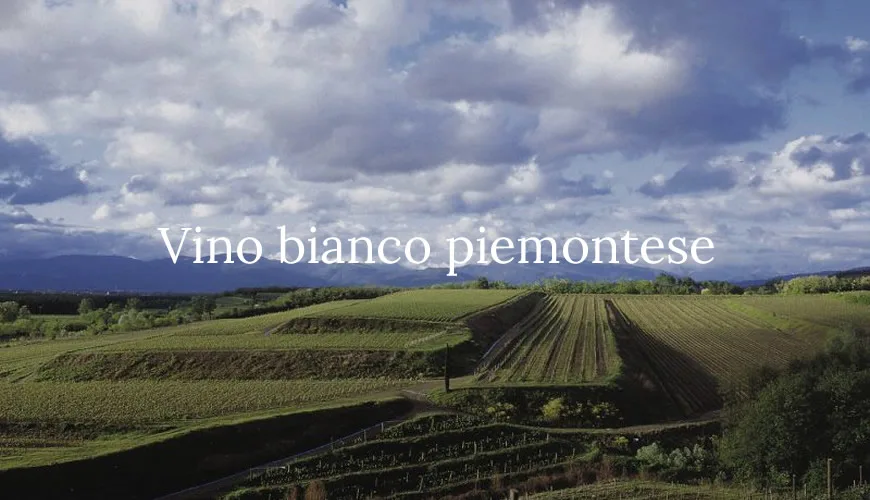
The excellence of Piedmont winemaking tends to be associated with great reds such as Barolo, Barbaresco, Nebbiolo, Dolcetto and Barbera. And yet, from the stunning hills of the Langhe, Roero and Monferrato, covered in endless rows of vines as far as the eye can see, a vast “white” wine heritage also emerges.
White Piedmont is best told through its different varieties and the character of its wines, and above all through the stories of the producers who have worked to establish white wines in a setting where glasses “in red” reign supreme.
Examples include Vigneti Massa, Tenuta Carretta and Tenuta Olim Bauda, small estates that produce great Piedmont white wines.
Vigneti Massa
Vigneti Massa is the fruit of the hard work and courage of winegrower Walter Massa, who since the 1970s has run the family winery founded by his ancestors in 1879. The estate covers 23 hectares on the Monleale hill, at around 300 metres above sea level. As many as 10 hectares are devoted to the white grape Timorasso, a variety that was at risk of extinction and that Walter Massa rediscovered in the 1980s, sensing its potential and stubbornly experimenting with different techniques in the cellar.
After the first harvest, in 1987, came vintages of varying interest, but the turning point only arrived in 1995, when it became clear that whites can age too and that Timorasso shows its best two years after production.
Following Walter Massa’s foresight, other producers also came to believe in the potential of this native Tortona variety.
After the 600 bottles of the first vintage, the mission to bring this grape back to life can be called accomplished: today Massa produces around 60,000 bottles a year. A success to make anyone blush – though there is no need, since we are talking about Piedmont white wine.
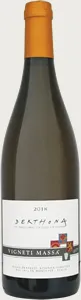
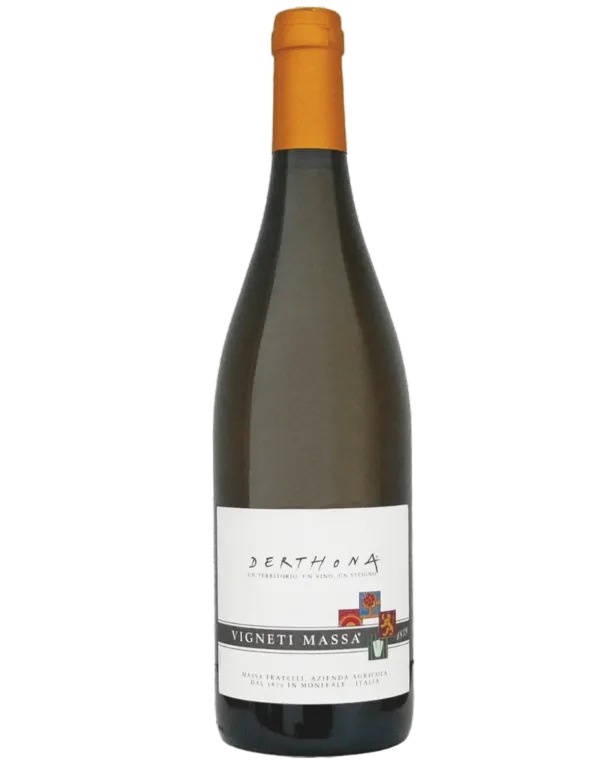
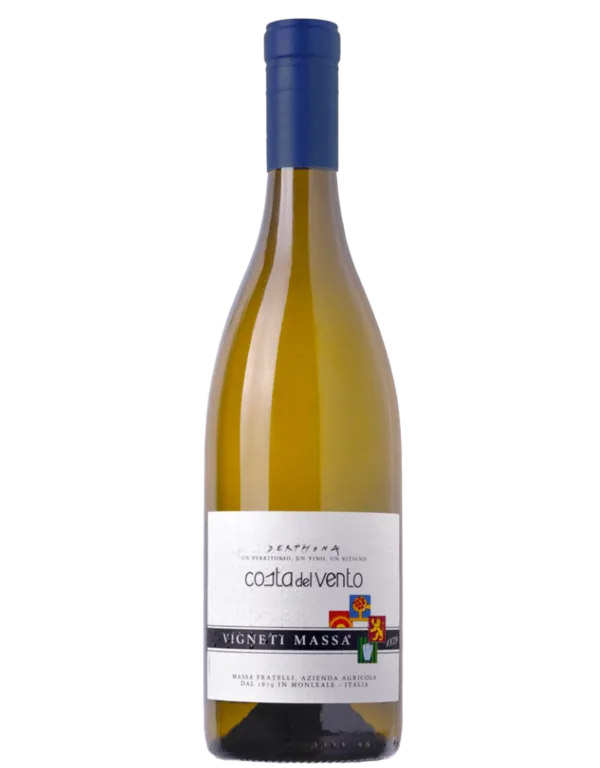
The heart of Vigneti Massa’s Timorasso production is Derthona, named after the ancient name of Tortona, made from less rigorously selected grapes than those used for Costa del Vento, the Massa winery’s cru wine.
Derthona owes its character to the grapes themselves, with medium-large, compact bunches, round berries and fleshy pulp. The harvest is by hand, into crates, and vinification takes place exclusively in steel.
Straw yellow in colour, Vigneti Massa’s Derthona offers pleasant floral fragrances on the nose. It has good structure; in the mouth it is savoury, mineral and fresh.
Derthona is an excellent white for an aperitif, but it also goes well with meals based on fish, vegetables or cured meats.
Tenuta Carretta
Between the Roero and the Langhe, Tenuta Carretta is considered the oldest and largest estate, with 70 hectares of vineyards, 35 of which are concentrated mainly in Piobesi d’Alba. Here the vines, which run across the hills forming a kind of natural theatre around the building that houses the winery, are trained using the Guyot method. This system allows better ripening of the grapes but a lower yield, which benefits the quality of the wine.
Tenuta Carretta, with its harvest still done by hand, also expresses the deepest and most living culture of Piedmont wine, based on a close union between people and nature. It is no coincidence that UNESCO, in declaring the vineyard landscapes of Piedmont a World Heritage Site, stated: “The vineyards of the Langhe, Roero and Monferrato are an exceptional example of human interaction with the natural environment: thanks to a long and constant evolution of techniques and knowledge of viticulture, the best possible adaptation of grape varieties to the characteristics of the soil and climate has been achieved, to the point of becoming an international benchmark”.
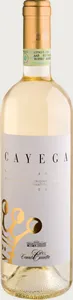
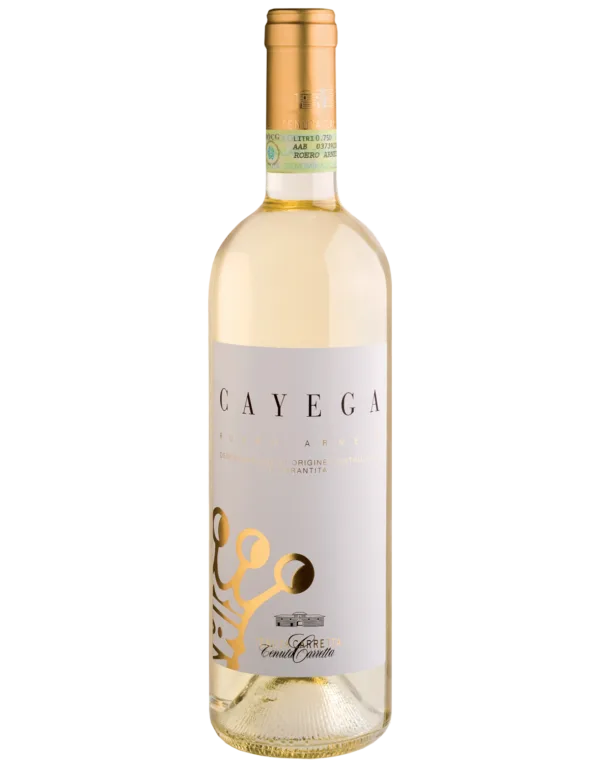
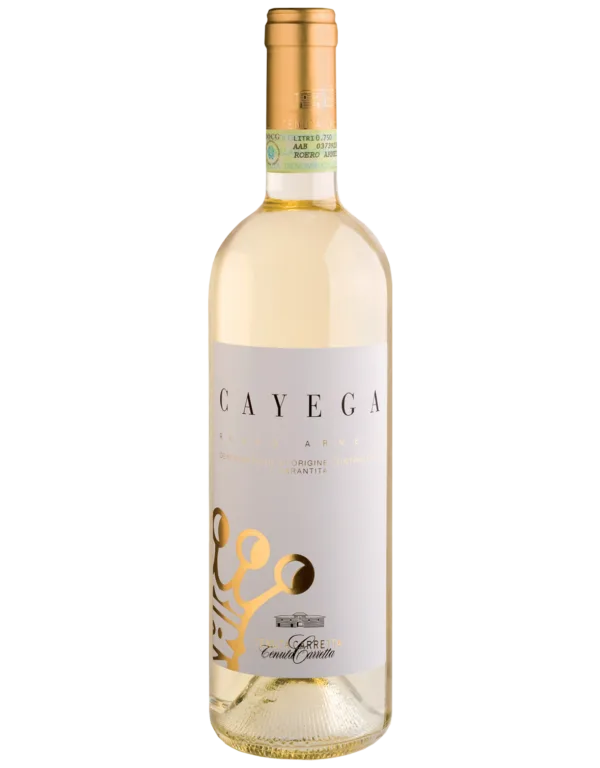
Among the whites made by Tenuta Carretta, the favourite is Cayega DOCG, made from one of the oldest varieties in Piedmont, Roero Arneis. Arneis, which in the local dialect means “little rascal”, is considered a bit of a madcap because its grapes change from year to year. But even if it is “grumpy”, the result is a pleasant, fragrant and harmonious wine.
Produced in the estate’s ancient and fascinating Roero vineyard, among gentle slopes and stories of noble families, Cayega is the fruit of a land devoted to viticulture for centuries.
At Tenuta Carretta, technical innovation always goes hand in hand with respect for local traditions. The final product is the result of culture, passion and pride.
Tenuta Olim Bauda
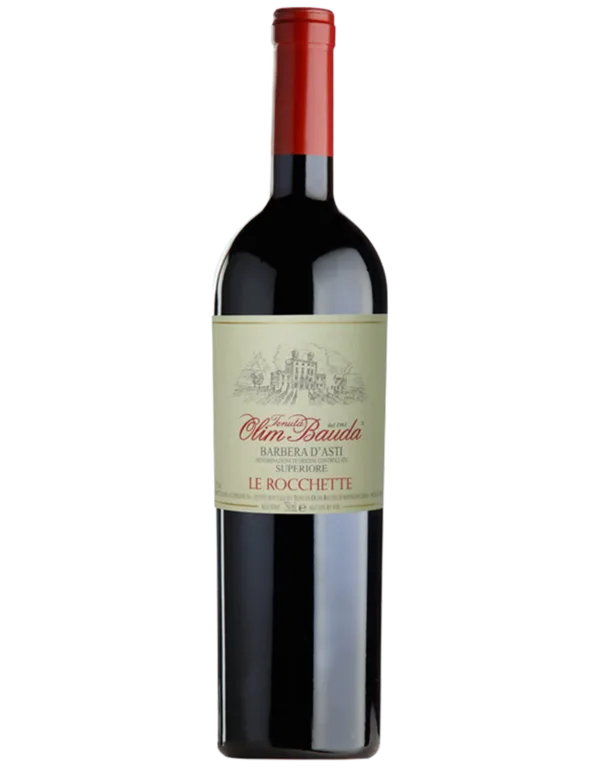
“Making wine” is a tradition handed down from father to son at Tenuta Olim Bauda: the land, the buildings, but above all experience and passion shine through steadily in the glasses of its wines. The estate produces one of the most important white wines in the region: Gavi, or Cortese di Gavi DOCG.
Cortese is a native white grape variety grown since the 1700s from Alessandria to the Colli Tortonesi, but it reaches its peak in the Gavi area.
For some years now Cortese di Gavi has earned a privileged place among “top-level” wines, thanks above all to the commitment of producers such as Tenuta Olim Bauda, who have worked to consolidate the image of this wine in the market for quality whites.
But other wines from the estate also deserve a mention.
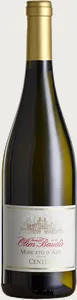
Centive, for example, a creamy, persistent Moscato d’Asti, with an aromatic and extremely intense nose, floral and fruity notes, and hints of sage, elderflower and citrus. On the palate it is fresh and fragrant, with a perfect balance between sweetness and acidity. The finish is particularly creamy and persistent.
Vinification takes place on the skins for just a few hours at low temperatures, after which the must is separated and given a first filtration to make it clearer. Fermentation, on the other hand, takes place in autoclaves at fairly low temperatures, for a period of around 20 to 30 days, during which the wine gains its sparkle. To stop fermentation, the must is then chilled further and microfiltered for bottling.
Piedmont, with this immense wine heritage, can astonish even the most expert wine lover: in winemaking terms it is a certainty, good for the palate but above all for mind and soul.
Its variety never bores even the most dedicated tasters, who sing its praises and celebrate its potential – so much so that in the future we will see it more and more often on lists of the best Italian wines, alongside its firmly established red sibling.