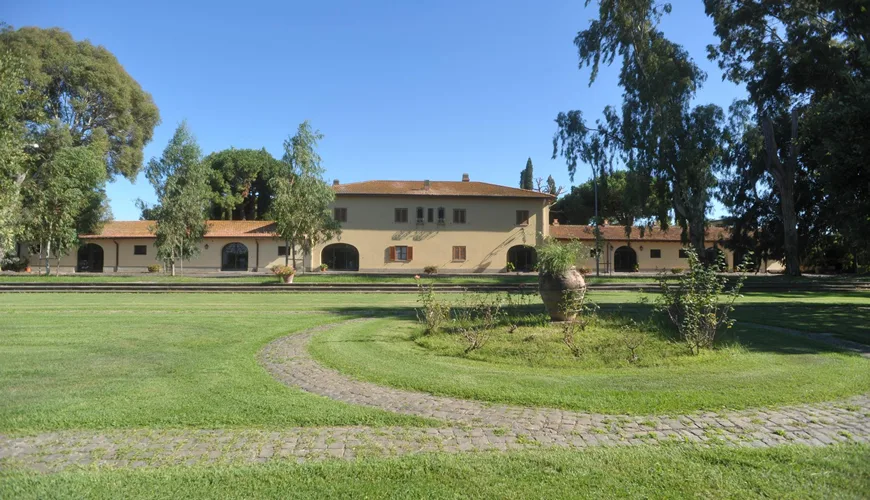
“Those who drink only water have a secret to hide”. At Casale del Giglio, the pleasure of sipping a good wine wins out over the fear of giving yourself away. Baudelaire could not have known it, but on this estate in the Agro Pontino there are no secrets. The setting is still, in places, young in winemaking terms, but it does not lie: the Agro Pontino has no traditions to inherit. The soul of its ecosystem only came to light in 1985, before the eyes of Antonio Santarelli who, with the support of the regional Department of Agriculture and many university researchers, carried on what his father had founded a few years earlier.
A winery?
Casale del Giglio is a research project, a freedom to innovate, the ambition of Antonio, who as a teenager rode his moped between the vines. New techniques all play their part in this experiment. They are the winemaking models adopted overseas, in Australia and California, less conventional ones, looking towards the future of the industry. But Italy is here too, very much so. Italy has been here for over a century. Casale del Giglio was born of Antonio’s wish to test, on still untouched land, what his family had been doing for years. For the Santarelli family, wine has been passion, love and dedication since the dawn of the 1900s.
Today Casale del Giglio speaks to those who also see wine as a means of experimentation. And it always follows the same path: where tradition has shallow roots, the winning move is to develop the land. It is a path that works, as the awards it has received show, but above all as the wines show.
The reds
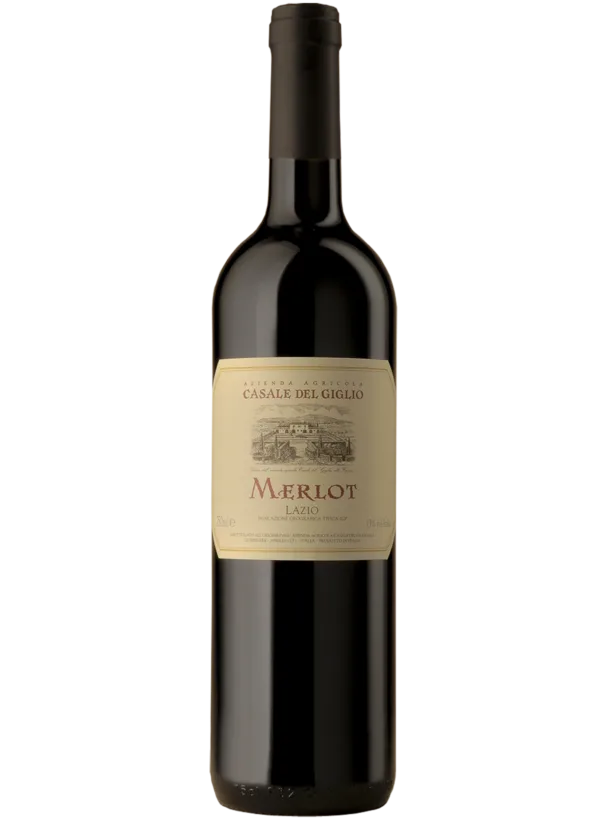
Shiraz, Merlot, Tempranijo, Petit Verdot, Cabernet Sauvignon. The grape varieties are international in origin; thanks to Casale del Giglio’s development project, these fine varieties have produced high-quality grapes in the Pontine area. Five reds for a territory that many still see as too young to make good wine; but be careful not to take that for granted. The Agro Pontino lies close to the sea, a fertile, flat land with sandy soils: this is where Petit Verdot, Shiraz and the others give their best. Intense hues true to their primary colour, aromas of good persistence, supple, assertive flavours can all be found in the diversity of each of the five.
The whites
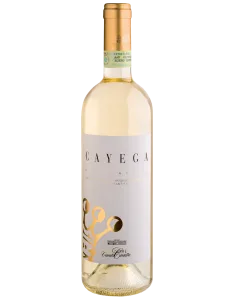
Chardonnay, Satrico, Sauvignon, Petit Manseg, Aphrodisium, Viognier, Antinoo, Antium, Albiola, Faro della Guardia. Not only international varieties: the whites also include native grapes, long present in the surrounding areas but forgotten or undervalued. Casale del Giglio is rediscovering their potential. The non-native varieties, on the other hand, need no introduction: the organoleptic character of each hints at the sensory journey it offers.
The rebirth of the marshland and its grapes
Years ago, who would have bet on the Agro Pontino? Only in 1924 was the great work of land reclamation resumed, a task first begun by the ancient Romans, with the drainage and sanitation of the area. In the 1980s winemakers still saw it as barren land; the risk of making wines with no sense of place was high. But Casale del Giglio’s project was far-sighted: redevelopment and experimentation paid off with positive results, strengthening the foundations of the innovation that started it all.
“The future development of Italian viticulture and winemaking lies not only in consolidating the image of areas with a great tradition, but also in achieving, through the right choices in the vineyard and in the winery, high-level wines with the right quality-to-price ratio, in territories whose quality potential for grape growing and winemaking is still little known.”
The words of Antonio Saltarelli hold the mission of his company: while on the one hand Casale del Giglio is still young compared with the “great” Italian wineries, on the other it is the springboard for the winemaking tradition of the Pontine area.
Casale del Giglio is a new opportunity for the territory.
Tasting at the winery: three Casale del Giglio reds
Shiraz
In 1985 the Casale del Giglio project welcomed the Shiraz grape, originally from Persia. The harvest only takes place when the grapes have reached optimal ripeness, followed by cold maceration, vinification, fermentation and finally ageing, which give the wine its assertive organoleptic character.
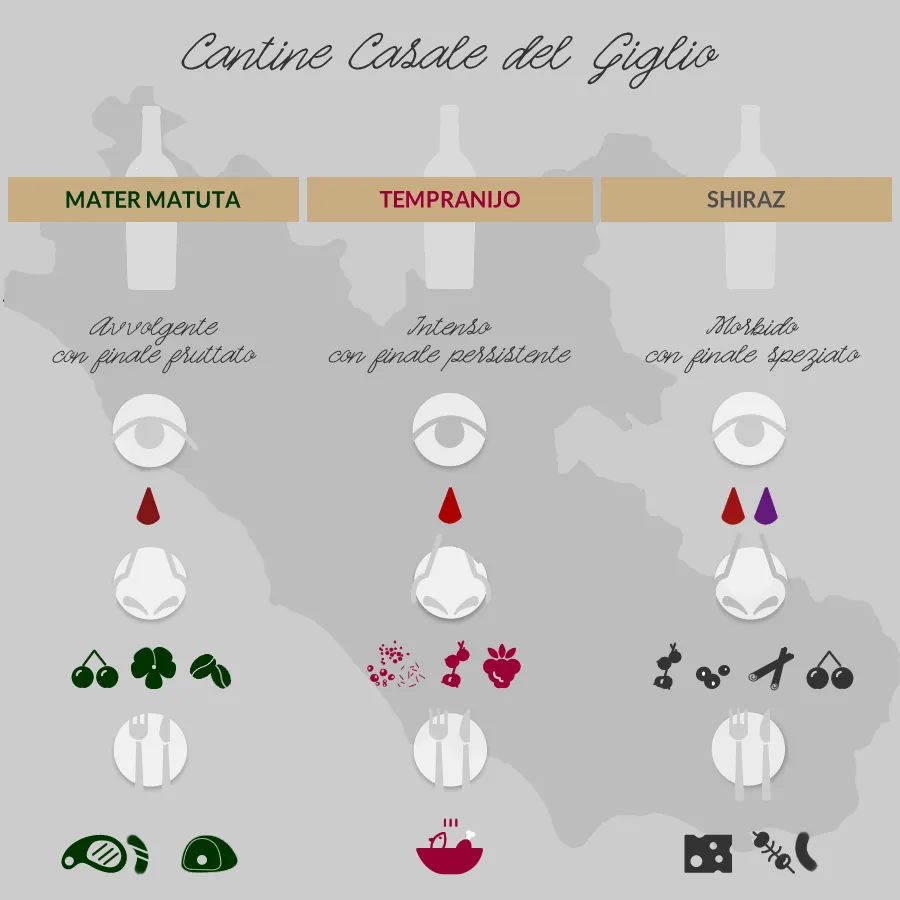
Shiraz is one of Casale del Giglio’s signature wines: a classic red to try with many dishes of Mediterranean cuisine, fish included. A standout pairing is a grilled tuna steak.
Now for the technical side: Shiraz shows the ruby red colour typical of an intense wine, with violet hues. Its intensity is clear on the nose too: a bold scent with good persistence, with fruity notes of redcurrant, blueberry, morello cherry, cardamom and cinnamon. On the palate it is supple and warm, with a good tannic texture and a finish that recalls spices.
Mater Matuta
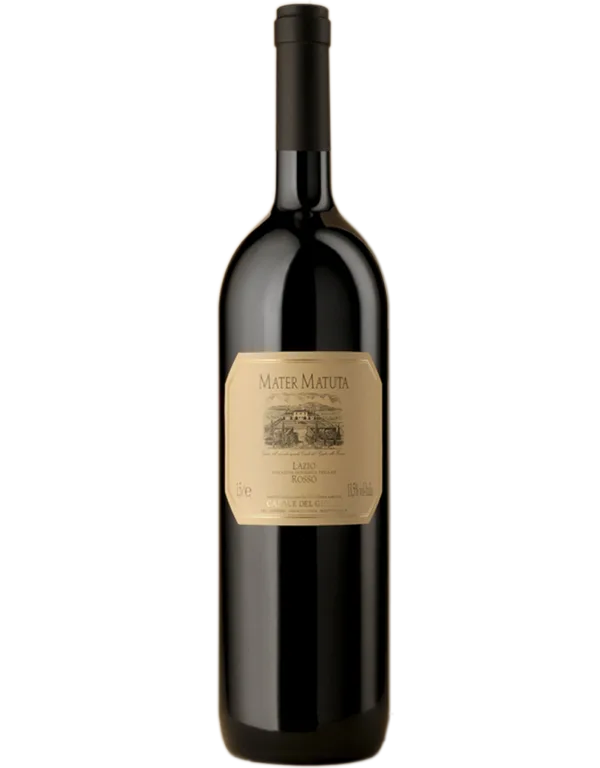
One of Casale del Giglio’s best-known reds, Mater Matuta is made from a blend of Shiraz and Petit Verdot. The grapes are picked only when fully ripe, and each of the two varieties then undergoes its own winemaking process. The name “Mater Matuta” pays homage to the goddess of the dawn, to whom the famous temple in the city of Satricum (Le Ferriere – Latina) is also dedicated.
The density of Mater Matuta does not go unnoticed: its red is dark, strong, concentrated. On the nose it becomes intense, with balsamic hints, dark coffee, violet and ripe morello cherry. And then it seduces. In the mouth Mater Matuta is enveloping, with a tannic texture in perfect harmony with a moderate freshness. The finish is persistent and fruity.
It is a red for the classic pairing with meat, grilled or in more elaborate dishes.
Tempranijo
The grape is called Tempranillo, and it comes from Spain. This variety has adapted very well to the climate and soil of the Agro Pontino, reaching full and perfect ripeness to make a full-bodied, balanced wine.
This is Tempranijo, an intense red, and not only in colour. The nose is of raspberries, blackcurrant and ripe morello cherry, with hints of undergrowth. Its fruity character comes through in the mouth too: Tempranijo tastes rich, with spicy and fruity notes and sweet tannins. Its aftertaste is long and persistent.
At the table Tempranijo plays with tradition: it pairs superbly with a typical dish of the Pontine area, “Tiella di Polpo”, a stuffed pie filled with produce from the sea and the land.
From wine country to archaeological sites
Today, at Casale del Giglio, innovation means developing the territory in several ways. Alongside promoting its wine trails, the company supports archaeological research: at Le Ferriere, the part of Latina where its cellars are located, lies an ancient city of Lazio, Satricum.
Casale del Giglio has long worked with the Soprintendenza per i Beni Archeologici dell’Etruria Meridionale on the cultural work of recovering this city. Among the most important discoveries is the Via Sacra, which led to the temple of Mater Matuta. So visiting the wine country of the Agro Pontino becomes a cultural experience with ever wider horizons.
Would you like to try a Casale del Giglio wine?
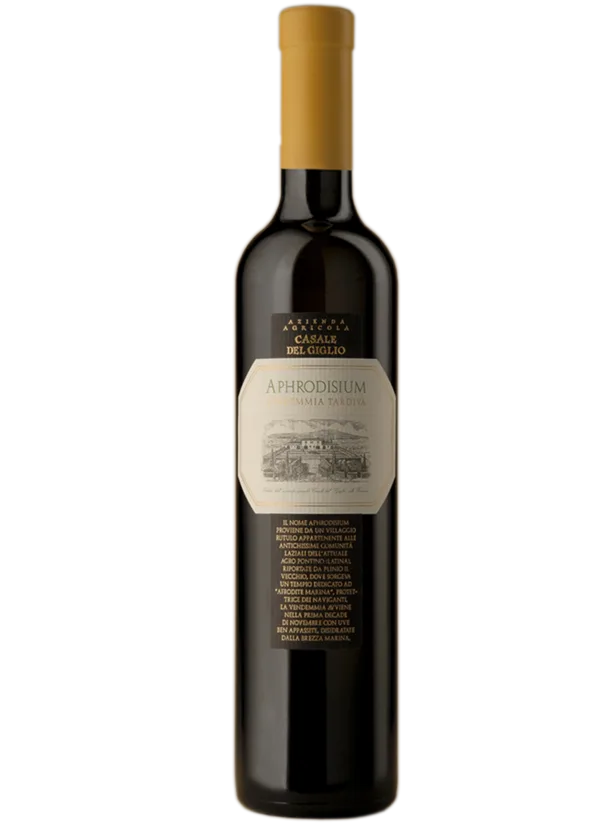
Casale del Giglio wines go with a whole meal, with the exception of Aphrosidium, sweet and enveloping, ideal with desserts. Open each wine’s product page to discover its characteristics and suggested food pairings.