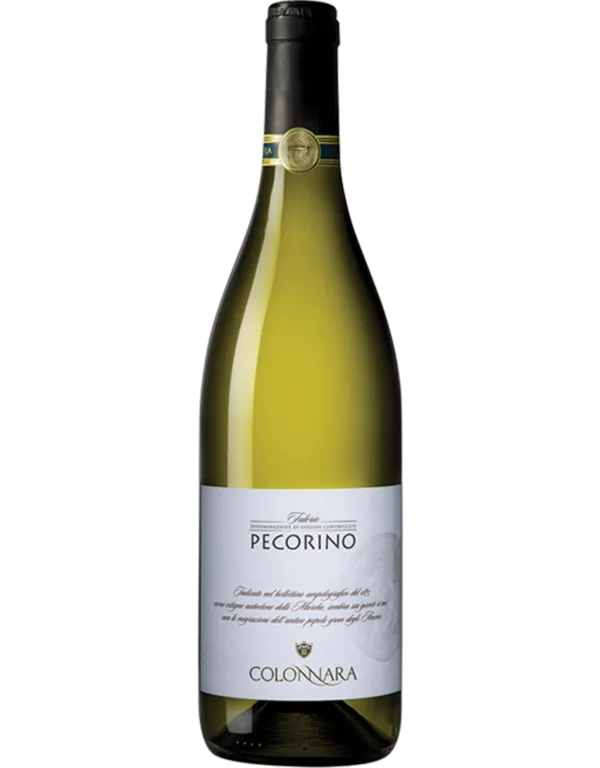
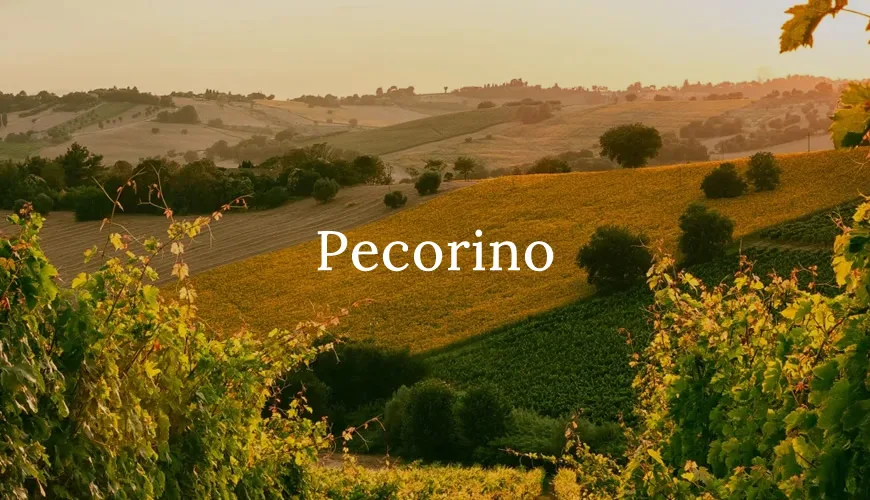
Pecorino is a white wine typical of the Marche and Abruzzo, a pleasure to drink alongside many specialities of Italian food and cooking.
In the Italian wine market, which has seen native grape varieties grow for years, Pecorino stands out as a very interesting bottle for anyone leaning towards authentic, sustainable choices. It is a white with a wonderful bond with the past and with its area of origin, in particular with Arquata del Tronto, which has been a true guardian of this wine.
Today we especially appreciate the structure and aromas of Pecorino, a wine unique of its kind that fears no comparison with other, more prestigious whites. Our customers like it also because it offers excellent value for money.
Let’s look at some choices from our catalogue.
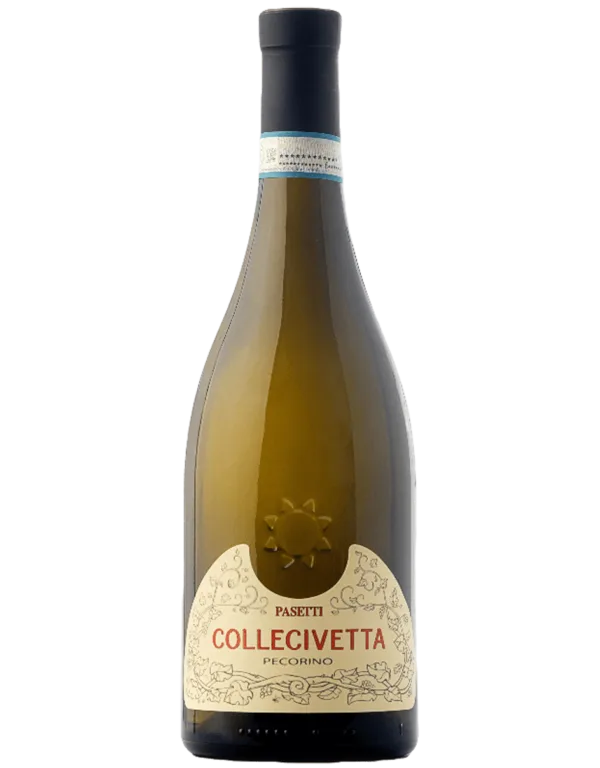
Pecorino Pasetti
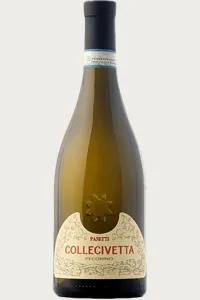
A young white that expresses the character of its land very well, a wine with the Abruzzo Pecorino DOP appellation.
It is vinified by cryomaceration, crushing and soft pressing; fermentation then takes place in steel with selected yeasts, and the wine ages in steel for 2 months on the fine lees and in the bottle for 3 months.
Pasetti’s Pecorino Collecivetta has a supple, tangy and persistent taste.
It shows a straw-yellow colour and aromas of elderflower, yellow-fleshed fruit and grapefruit.
The winery is the Abruzzo estate behind the famous Testarossa, a company with a long winemaking tradition behind it, which today works with highly distinctive grape varieties in the mountain areas of the Gran Sasso and Monti della Laga National Park.
Several Pasetti wines have won awards, international ones included, among them this very Pecorino Collecivetta, featured among James Suckling’s selections.
Pecorino Zaccagnini
Tralcetto is Zaccagnini’s Pecorino.
A wine with a bright, delicate straw-yellow colour, which on the nose stands out for notes of flowers and yellow fruit, with hints of aromatic herbs. In the mouth it is fresh and pleasant, with an elegant finish of medium length.
This Pecorino is made by soft crushing of the grapes, cryomaceration, vacuum pressing, cold settling of the must and fermentation of the clear fraction only, at low temperature in stainless steel.
This is followed by blending in steel tanks and ageing on the lees.
Tralcetto has great meaning for the winery, in its name too: for Zaccagnini, the cult of wine can be summed up in the vine shoot tied around the neck of its bottles, a symbol of excellence, passion and love for the art of wine.
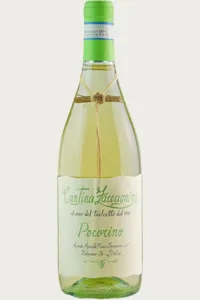
A winery born in a small Abruzzo village, which has always pursued a constant quest for perfection through socially and environmentally responsible action.
Pecorino Velenosi
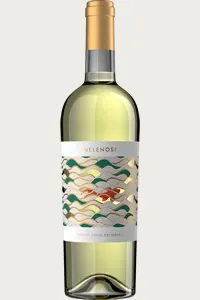
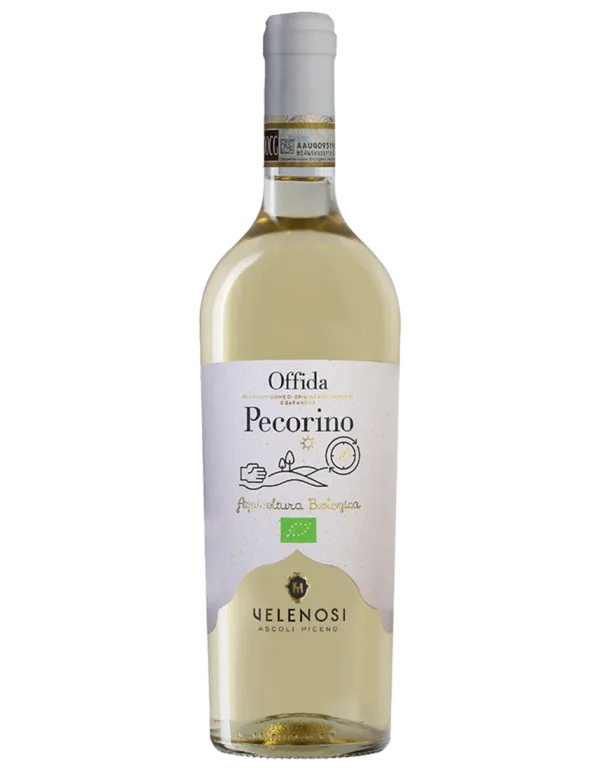
Produced in the Marche, Offida is the Velenosi winery’s Pecorino.
An organic wine of notable freshness, with good structure and persistence.
It is distinguished by a bright straw-yellow colour with greenish hues and by its aromatic complexity, with notes of yellow and white-fleshed fruit such as pineapple, banana and apple, and herbaceous notes.
A supple, elegant Pecorino made by vinifying the grape of the same name from vineyards in Ascoli Piceno and Offida.
The grapes are picked by hand and stored at controlled temperature.
This is followed by vinification in steel, with fermentation on indigenous and then selected yeasts.
The Velenosi winery stands out for having integrated cutting-edge technology without leaving tradition behind, staying true to its time-honoured artisanal approach.
For more than 35 years it has made exceptional wines, recognised internationally too, driven by constant research and the ambition to always achieve the best possible result. Every wine represents Velenosi’s aspiration to a perfect balance between taste and colour, between bouquet and aftertaste.
Pecorino Torre dei Beati
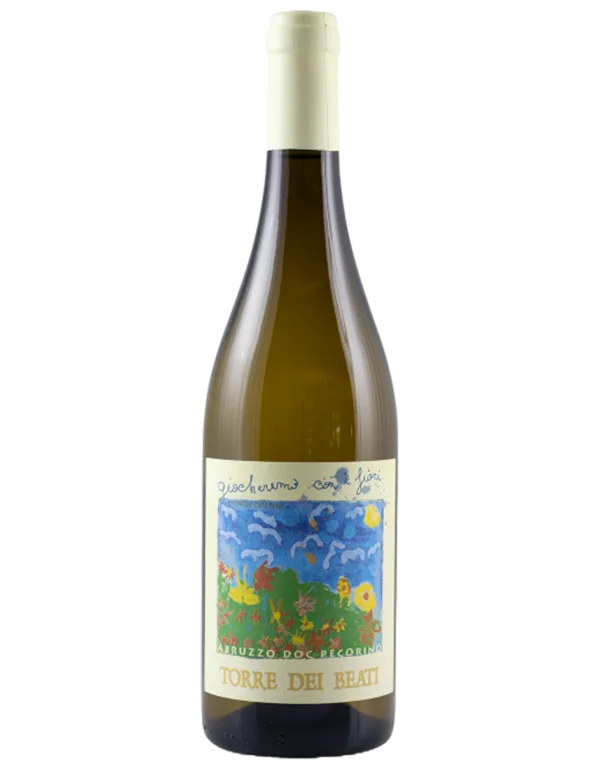
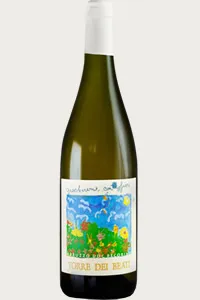
It is called Giocheremo con i fiori, and it is the Pecorino of the Abruzzo winery Torre dei Beati.
A wine with pronounced floral hints and a bouquet of pear, citrus and wild herbs.
It stands out for its great freshness, together with a vein of acidity and savouriness.
Giocheremo con i fiori is an organic Pecorino that owes its flavour above all to the privileged spot where it is made: the vineyards lie at the foot of the Gran Sasso.
Here, sharp day–night temperature swings give it a surprising aromatic range.
There is also great respect for tradition and the ecosystem, and for the unspoilt landscape of Loreto Aprutino.
The family-run winery chose to invest in this area, driven by the desire to bring out the best in native grape varieties through careful selection both in the vineyard and in the cellar. Its farming practices aim at a constant balance between vegetation and production, in order to keep yields always limited and not give in to the logic of large volumes. The vineyards are certified organic.
Pecorino wine: characteristics and food pairings
In general, Pecorino is a wine with remarkable structure, filling the nose with marked, clean aromas, especially herbaceous ones. It is made entirely from the grape of the same name, which stands out for its great resistance to adverse weather and for ripening more slowly than many other white grapes. This translates into greater aromatic complexity. The grapes also have good acidity, which is then reflected in the wine: lively and fresh, and always with good persistence.
Thanks to its organoleptic qualities, Pecorino wine lends itself to a wide range of food pairings. Personal taste and the specific wine aside, here are some ideas, pairings that generally work well with Pecorino:
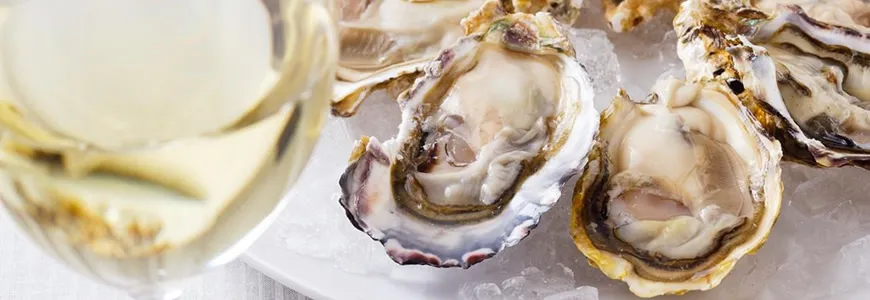
- with fish: an ideal match for crustaceans, molluscs and seafood. For more delicate dishes, you can opt for a young, lighter Pecorino;
- with meat: Pecorino is a perfect wine with white meats such as chicken, turkey and rabbit. Here a more structured wine also works very well;
- with cheese: ideal with both mild and medium-aged cheeses. And of course the pairing with the cheese of the same name is a must.
Pecorino wine: origins and curiosities
Beyond the distinctive features of each winery’s wines, one thing all Pecorinos have in common is their origins. There are several ideas and beliefs about them.
One of the most widespread links the name Pecorino to transhumance, the seasonal migration of flocks typical of Abruzzo. According to this theory, the Pecorino grapes ripened just as the animals were being moved, and the sheep were very attracted to the bunches. Hence the name.
Also linked to the world of sheep is the theory that traces the wine’s name to the elongated shape of the bunch, which seems to recall a sheep’s head.
There is also a food-based belief, according to which the wine’s name comes from its pairing with pecorino cheese.
However, historical sources trace Pecorino’s origins to the work of Benedictine monks in the municipality of Arquata del Tronto, and its name to a possible mistranslation from Greek.
Is Pecorino from Abruzzo?
Today Pecorino is often identified as a wine from Abruzzo. However, as mentioned at the start, Pecorino wine was born in the Sibillini mountains and is particularly tied to the area of Arquata del Tronto, in the province of Ascoli Piceno.
This is its origin because it is from here that the clones came, later planted in Abruzzo too.
In recent years, several associations in this area have been working to revive and promote Pecorino wine. In Arquata, century-old vines bear witness to the strong historical bond with the wine, whose real development began in the Benedictine monasteries thanks to the careful and particularly meticulous work of the monks, who set in motion the development of several grape varieties.
In short, which is the best Pecorino wine?
This kind of question is always hard to answer.
The best is often a subjective judgement, tied to personal taste and to how you weigh up the price. We select quality wines that convince us, from wineries that work with care and a distinctive approach; our experience in the world of wine helps us find and offer the best bottles, the ones our customers love.
We have recommended some of our Pecorino wines: which is best is up to you and, either way, it will be an excellent choice!